Radical
environmentalists have pointed to chemicals such as bisphenol A (BPA)
and phthalates as “toxins” responsible for causing obesity, cancer, and
even male infertility due to decreased sperm counts. As proof, they cite
a 1992 study by a group of Danish researchers that claimed sperm counts
declined by 50 percent worldwide from 1938 to 1991. However, their
research was heavily criticized for its many flaws, methodological
problems, and biases. Now, though, the life raft that anti-chemical
zealots have clung to is sinking, as a new study by the same group of
researchers found
no decline in the sperm counts of its male cohort. Data gathered from
5,000 18-year-old men over the course of 15 years detected no decrease
in sperm numbers or quality; still, the researchers did not publish
these monumental findings. Instead, the data was posted on a website for
the Danish Ministry of Health and later was published by the journal Epidemiology.
According to commentary by Dr. Jens Peter Bonde, a fertility researcher
at Copenhagen University Hospital, the research constitutes “the best
longitudinal semen data yet available.”
“We know that the so-called decline in sperm count is just another
myth promulgated by the ‘our stolen future’ crowd who say that
environmental chemicals lead to infertility in men,” says ACSH's Dr.
Gilbert Ross. “But now we have proof that’s simply not true.”
In my seventy five years of life and forty years in the pest control industry
I’ve seen a lot of changes. Some positive, and unfortunately, many very
negative. Changes that were very subtle and very slow, but as
destructive as a glacier in the thrust of our thinking, and our views of
reality. I find myself the only openly heterodoxical writer in our
industry nationwide. Although based on e-mails, and even phone calls from all over the country, I believe there may be a
‘silent majority’ out there. Let’s face it, heterodoxy isn’t for the
faint of heart.
Timothy P. Carney [writer for the Washington Examiner] said:
Washington
is a debate club for the logically impaired, with its share of
fallacies, sophistries, oversimplifications and utter absurdities.
I find this pattern repeats in more areas than just
Washington. Through legislative power and massive amounts of grant money
federal bureaucrats have had a great deal to do with undermining any
natural sense of logic in the minds of everyone in the nation, including
industry, and I think it's fair to ask if the pest control industry is any different?
In my years I have seen our industry go from being
ardent defenders of pesticides universally, to a substantial number who
are almost as anti-pesticide in their approach as anyone from the Sierra
Club or the NRDC, especially with their embrace of "green" pest control, and IPM. I find this especially true with those holding advanced degrees in our industry.
The
NPMA supported School Environmental Protection Act. Ohio refused, and at Legislative Day told our Senators and Representatives we were not in harmony with NPMA on this. John Boehner was one of them.
Perhaps I missed it, but as far as I can tell they've been silent
on repealing the Food Quality Protection Act, and some even claimed it
was a good law. However, when looking at the history of the FQPA, that was understandable at the start. But time is the great leveler of truth.
This originally was a law that was intended to be a pro-pesticide bill, and stop the foolishness over the 1958 Amendment of the of the 1937 Federal Food, Drug, and Cosmetic Act known as the Delaney Clause. An amendment that unscientifically declared if something tested carcinogenic at any level, it was carcinogenic at every level. But the EPA turned this into one of the most corrupt anti-pesiticde law since the EPA banned DDT. As a result, we lost Ficam and Dursban, (carmabates and organophosphates) because of EPA's irrational and radical changes regarding risk and unending testing. More here. Then there was the demands regarding endocrine distuptors.
Neither were banned in spite of what you may read. The
manufacturers pulled their registration for structural applications.
There was very little argument, and when Dow decided not to fight it the
other companies manufacturing chlorpyrifos gave up.
It has seemed to me that over the decades the NPMA has
far too willingly embraced a philosophy of appeasement with the
neo-pagan secular psuedo-religous movements of the left.
Then there was the Butterfield Bill, as I outlined in my aritlcle, The Butterfield Bill: Activity as a Substitute for Accomplishment, Part II, which NPMA wanted us all to support. Why? I read it, and was outlined what was wrong with it. I was told I needed to see the positive aspects of that bill. I asked - what were they? I didn't get an answer.
Well, it didn't pass, and if it had, it wouldn't have done anything to relieve the plague of bed bugs in America. If passed it would have been an expensive waste, and an ineffectual imposition on our industry and the public. In short, more government, less results. And we were supporting this why?
Why? That’s the question I keep asking, and I don't get satisfactory answers.
In the early years of the modern green movement -
started largely with the 1962 publication of Rachel Carson’s science
fiction book, Silent Spring -
the green movement insisted pesticides were a major cause of cancer. I
remember those days, and I also remember the conversations by the older
members of my family talking about this. People believed modern living
was responsible.
They were right, but for the wrong reasons.
Industry
[and cities and towns in America] were responsible for many sins
against the environment, so it was easy to point the finger, but mostly
it was pointed at industry. The real finger of blame should have been
pointed at the personal habits of people themselves. That was where the
rise in cancer rates appeared.
Over the years the rates of cancer have consistently
dropped, and yet we still hear the irrational – and unscientific –
mantra that pesticides cause cancer. If you were to take a plastic
overlay of our modern demographic and put it over the demographics of
those living in 1914 and those living in 2014 you would notice two very
distinct differences. Very few people smoked and very few people lived
past 65, the two major areas of cancer related deaths. The decrease I
spoke of would be even more dramatic if we reduced the demographic of
smokers and the aged from our modern demographic chart.
Now that whole narrative has been shown to be blatantly false, so what did they do? Now the big ones are endocrine disruption (and here), Colony Collapse Disorder, and the junk science surrounding the Sixth Mass Extinction. All of which have been proven false by time and real science.
When the federal government bannedDDTindustry rose up as one to defend it, and it was the same for chlordane. Then came theFood Quality Protection Act and
which brought about the irrational elimination of Ficam and Dursban
(chlorpyrifos), [Neither were banned in spite of what you may read. The
manufacturers pulled their registration for structural applications. There was very little argument, and when Dow decided not to fight it the
other companies manufacturing chlorpyrifos gave up.
Was it a business decision? You bet!
Chlorpyrifos
was out of patent and it represented a very small percentage of their
annual intake, at least from structural pest control, and the lawsuits
kept coming. It is interesting that the last time I looked it’s still
used as an agriculture product under the brand name Lorsban. But since we now know how deceitful the EPA has been with it's Secret Science on Dursban. Why aren't we demanding Dursban's return?
The
makers of Ficam W (bendiocarb), which I understand is still used in
Australia and New Zealand and I’m told still works on bed bugs, gave up
also. Why? We lost two whole categories of pesticides [organophosphates
and carbamates] from our arsenal with that terrible piece of legislation
called the Food Quality Protection Act, which wasn’t about food or
protection. It was about making it too expensive to keep pesticide
registrations active, thereby banning pesticides without having to go
through all those nasty and potentially messy legal and scientific steps -
where they would have lost.
Now we come to the new restrictions on pyrethroids,
and there is hardly a peep, except from Ohio’s pest controllers. People
at the national level may not like it, but if the Ohio pest controllers –
who are responsible for the very existence of NPMA – CAN stand up to be
counted, and fight the good fight. why CAN'T the NPMA?
A fight the
entire industry should have been fighting and should still be fighting.
But nothing happened. Quietly as church mice, passive as sheep and as
rational as lemmings, NPMA did nothing useful to maintain our ability to use pyrethroids as we've been doing for decades. Oh, I can hear the screams now about how much NPMA did, but the proof is in the pudding. We have unreasonable restrictions.
What’s worse it appears the manufactures of
pyrethroids, known as the “Pyrethroid Working Group (PWG), an industry
task force whose members are AMVAC, Bayer, Cheminova, DuPont, FMC
Corporation, Syngenta and Valent’, were part and parcel of this
pesticide reduction scheme. I would have loved to have been a fly on the
wall when the Pyrethroid Working Group was formed. I wonder, does this
whole thing sound conspiratorial to anyone besides me?
I know…I know….there’s no such thing as a conspiracy. I
often wonder why the people who have never read a history book are so
ardent in that view. Just a thought! And why were these restrictions to structural pest control and not to lawn care or agriculture? We have substantial restrictions against where and how
we make pyrethroid applications to structures, while the lawns,
fields and shrubs can be covered with pyrethroids by the lawn care and
agricultural industries.
Does that sound irrational to anyone besides me?
All this to protect an almost microscopic shrimplike
creature known as Hyalella azteca, a creature that is capable of living
in extremely adverse conditions, and is one of the most prolific
creatures in North America and South America. Pyrethroids are used
extensively everywhere. How can that be if these products are so deadly
to Hyalella here in the United States? Or more specifically California.
I have spent some time going over the information
available and there are a number of things I would like to see answered.
Since this “shrimp” is so impacted by small amounts of pyrethroid
materials; with one study claiming the appearance of chlorpyrifos
created a more toxic impact, which I found truly interesting since we
are no longer using chlorpyrifos in structural pest control, so where did that come from? Agriculture! Until recently there was no real effort
to eliminate it for agricultural purposes, but the Scott Pruitt,
President Trump's first director put a stop to that saying they were
going to follow the science. While that's still being litigated, the
important fact is this: The chemical companies fought to keep it for
agriculture. Why not structural pest control? Why hasn't NPMA been more strident on these matters?
But the real questions that need answering are these:
NPMA seems to have a penchant for embracing leftist narratives on pesticides and junk science. Why?
Now our national association is deciding if it's going to get involved in "diversity" issues. Why?
The structural pest control industry has nothing to be ashamed of. We've accepted people from every walk of life in our industry, regardless of race, religion, sex and even sexual orientation. In Ohio, in the 1960's one of the founders and first President of what's now the Greater Cleveland Pest Control Association was Bob Caldwell, and is a past President of the Ohio Pest Management Association. He's black. In the 1960's Ohio was either the first or among the first to choose a woman for it's state association President, Betty Portwood, and our current President is Molly Patton Marsh. John Patton's daughter.
Betty has now passed and was in her 90's, and Bob is still running his company, and both were respected and treated accordingly by our industry forever.
What are NPMA's priorities?
Why has the NPMA decided to get involved in social engineering?
Is that their job?
Where in the NPMA constitution does it outline that as a duty?
If that became their job, when was that decided, and by whom?
Does that mean we can start posting about social issues on the NPMA Open Forum now?
In the past anyone doing so would have their posts deleted, and even then, we were subject to unpublished and unknown standards for acceptance, even if the posts or comments met the posted criteria for acceptable posts. I've been there, so I know it's true. Just like EPA had secret science, it would appear, the NPMA had, and possibly
still has, secret standards for posting on the Open Forum regarding topic, and who was posting. But either
way, we still have to come back to the main questions.
Why is the NPMA getting publicly involved with Social Justice issues?
What is their agenda, and why?
If the NPMA can be so public about social issues that have no bearing on pest control, how can they restrict anyone else from doing so?
Is that blatant hypocrisy!
I think those are important questions because they've clearly gone in directions that are not part of the real reason they came into existence, which used to be to fight for the structural pest control industry against all adversaries and enemies, in and out of government.
What is their agenda now?
What are their priorities?
Who articulated such an agenda and priorities and why?
Do we need to redefine and rewrite the NPMA constitution and bylaws?
Make no mistake about this:
"If there is ever a contest for words that substitute for thought, “diversity”
should be recognized as the undisputed world champion. You don’t need a
speck of evidence, or a single step of logic, when you rhapsodize about
the supposed benefits of diversity. The very idea of testing this wonderful, magical word against something as ugly as reality seems almost sordid." Thomas Sowell
This
article or excerpt is included in the GLP’s daily curated selection of
ideologically diverse news, opinion and analysis of biotechnology
innovation. Plastics and pesticides: Health impacts of synthetic
chemicals in US products doubled in last 5 years, study finds,” a July
22 CNN headline announced to the world. Referring to a paper recently published in the journal Lancet Diabetes and Endocrinology, the media outlet told its readers in no uncertain terms what’s at stake:
The proof is piling up: Many synthetic chemicals can harm
your health and that of your children. Evidence has doubled in the last
five years about the negative impact on our health of
endocrine-disrupting chemicals in plastics, pesticides, flame retardants
and other merchandise….
“It’s a global problem,” the paper’s senior author told CNN. “These
are chemicals used in consumer products all across the world.”...............
In fact, the astounding claim that the “health impact of synthetic
chemicals in US products” has doubled in the space of five years is in
no way supported by the Lancet analysis. The media coverage of
the paper, and indeed the paper itself, are part of a decades-long trend
among some scientists and activists to amplify the risk of exposure to
chemicals in consumer products far beyond what can be justified by the
evidence..............
A key fact that the review authors
failed to acknowledge anywhere in
their paper is that most of the exposures reported in the studies they
examined add up to trace amounts of the various compounds. That is, they
can be detected with sophisticated analytical techniques but are below
the level where they are likely to cause any harm. This poses a problem
for epidemiologic studies..........While focusing on trace chemical
residues, studies investigating EDCs
often fail to account for the many lifestyle factors that have
documented health effects and are likely to dwarf the possible impacts
of EDCs................
This conclusion deserves careful scrutiny for many reasons, the most important being that the Lancet review and the new JAMA Network Open study
failed to acknowledge that BPA has been the subject of extensive,
high-caliber research over the past two decades. This research has
demonstrated that human exposure to BPA is extremely low and that the
compound is efficiently metabolized and excreted in urine, even in
infants. Furthermore, BPA’s estrogenic potency is orders of magnitude
lower than that of the natural hormone estradiol.
In their introduction, the authors of the Lancet paper
referred to DDT, an insecticide whose indiscriminate use following World
War II gave rise to the environmental movement in the 1960s. But the
DDT experience also provides a cautionary tale, which they failed to
mention.
In 1993 an early epidemiologic study reported that, compared to women
with relatively low blood levels of a DDT metabolite, women with
relatively high levels had a three-fold increased risk of developing
breast cancer. The results were widely publicized and generated intense
concern among women. However, when a large number of further studies
were done, their results consistently failed to support the existence of
an association............To Read More....
An endocrine disruptor (also called an “environmental estrogen”) is supposedly any one of a variety of chemicals that, at extremely low-level exposures, well below those considered safe by EPA and other regulatory authorities, disrupt the human or animal hormonal system to cause diseases or conditions such as development defects, infertility, obesity, Alzheimer’s, autism, cancer and others.
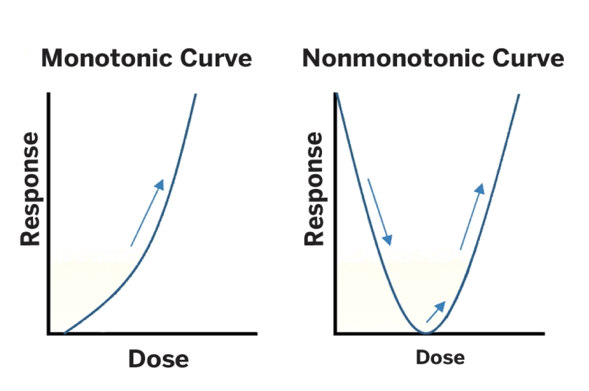
A key argument of those advancing this thesis is that standard laboratory tests fail to pick up on these hazards because the harmful effects of the endocrine disrupting chemicals or compounds, often called EDCs for short, vanish as the dose increases (though they may increase again as the dose is raised even higher). In other words, EDC advocates discard the proven toxicological principle that “the dose makes the poison,” i.e. that toxic effects of a substance increase as dose or exposure to the substance increases. In fact, they turn it on its head, saying that for this special class of chemicals, the reverse is true.
This contrast is illustrated in the graphs below. The standard dose response — seen in all toxicology to this point – is called a “monotonic” curve, meaning it is always moving in one direction, up or down. EDC advocates say that these special compounds produce a U-shaped or “non-monotonic” dose-response curve.(1)
It is important to note that the existence of the non-monotonic dose response which is key to the endocrine disrupter scare and is which is loudly advocated by a small group of activist scientists remains only a hypothesis and has never been scientifically validated. Twenty-two years after the EDC thesis was first advanced, not a single chemical has even been demonstrated to act non-monotonically that is, to cause harm at low doses but not at higher ones.
The standard dose response, seen in all toxicology, is “monotonic”: the greater the exposure, the greater the harm. The “non-monotonic” dose response claimed by EDC activists has never been demonstrated.
Useful concepts
Activists often (intentionally) try to confuse the public about endocrine disruptors on two key issues:
Low vs. high exposures. The endocrine disruptor scare is exclusively about low-dose or low-level exposures to chemicals in the environment. Activists often throw into the mix examples of harm caused by high-level exposures to chemicals.
Harm vs. mere effects. Activists often tout the results of studies that report chemicals caused some biological effect to occur vs. actual harm. Prior to being dubbed “endocrine disruptors” by the activists, substances that act like hormones to produce effects at small doses but no harms, were referred to in a more neutral terms as “endocrine modulators” by scientists.
The endocrine disruptor scare is about actual harm caused by low-level exposures to chemicals in the environment. More on these points below.
Dose makes the poison
Toxicology is the study of poisons. A basic principle of toxicology is “the dose makes the poison.” This means that any substance can produce poisonous, toxic or harmful effects if one is exposed to enough of it. Here are three variations of this principle.
Example: Ingesting too much arsenic can be fatal. Nonetheless, some arsenic can be safely ingested without any toxic effect.
Example: While we cannot live without drinking water, drinking too much water can cause death by upsetting the body’s electrolyte balance and fatally disturbing brain function.
Example: While inhaling too much carbon monoxide can cause death, the human body naturally produces a necessary but small amount of carbon monoxide.
There is no example in toxicology where any non-zero exposure to a substance causes harm. Every substance has a safe or no-effect exposure level.
Distinguishing between harmless biological effects and harmful or adverse effects.
A related principle to “the dose makes the poison” is the distinction between mere biological effects and actual harm following exposure to a substance. Mere exposure to a substance does not necessarily cause a harmful or toxic effect (i.e., the dose makes the poison). But all exposures cause biological effects. Drinking water, for example, causes biological effects, ranging from beneficial (if you are dehydrated), neutral (in case of normal hydration) or harmful (in case of overhydration). The mere occurrence of an effect does not imply that the effect was harmful or adverse.
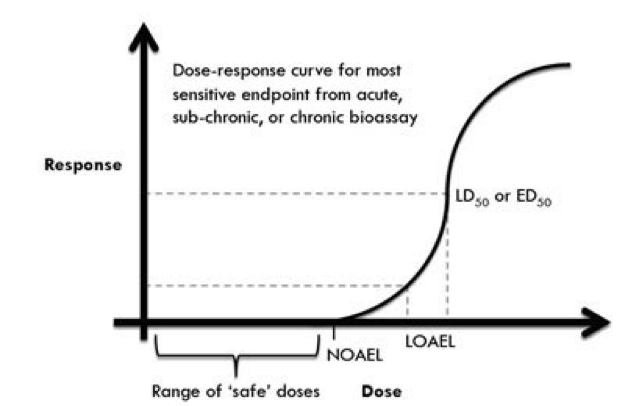
Dose-response. The relationship between exposures (or doses) and effects is called the “dose-response” relationship. It may be represented graphically by a dose-response graph or “curve” (See below). This curve illustrates some of the aforementioned concepts. The ‘no-observed-adverse-effect-level’ or NOAEL is the highest dose at which no biological effect is observed. The lowest-observed-adverse-effect is a point or range at which biological effects begin to be observed. (The LD50 is the point at which half the lab animals are outright killed by the dose it is not relevant to this discussion.)
It will be seen later that the “low-dose hypothesis” area of the endocrine disruptor scare involves doses at the NOAEL and below — the “hypothesis” being that any non-zero exposure to an endocrine disruptor can cause an adverse effect. The low-dose hypothesis, then, is contrary to everything that is has been observed in standard toxicology.
Natural versus synthetic endocrine modulators
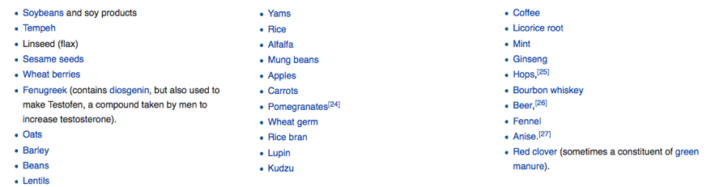
Many natural substances may also have hormone-like effects. Phytoestrogens, for example, are not produced by our endocrine system but are present in many of the vegetables and fruits that make up a healthy diet. Below is a list of some phytoestrogens.(2)(3)
One of the problems with the EDC scare as advanced by the activists is that they almost exclusively focus on made-made, synthetic chemicals, even though our exposure to so-called EDCs from natural sources, which are known to be safe and even healthy – are massively higher. Stephen Safe, a toxicologist at Texas A&M University, points out that “the total hormonal activity of the synthetic modulators we receive from industrial activity is 40 million times lower than that from the natural components of foods we eat.”(4) [Italics added]
Bisphenol A, or BPA, a substance used to harden plastics, and phthalates, substances that make them more flexible, have become a prime focus of EDC claims and have been removed from many household products as a result. But according to researchers at King’s College in the United Kingdom, their tests on laboratory animals showed that one natural estrogen found in plants “is 10 to 100 times as potent as bisphenol A. They also found that three different phthalates — the chemicals that caused the British dairy panic — produced no hormonal effects whatsoever.”(5)
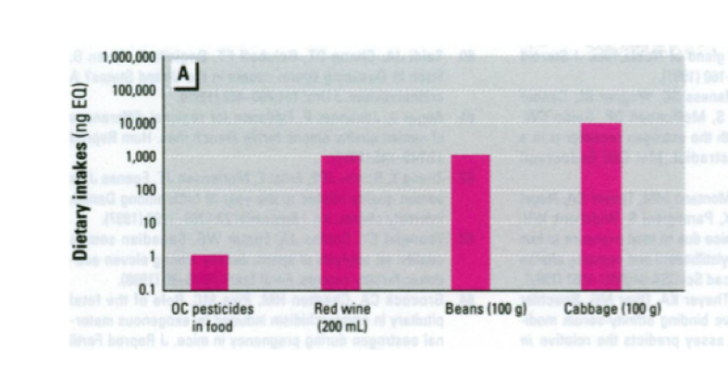
Red wine, beans and cabbage, for example, range from 1,000 to 10,000 times more active as endocrine modulators than organochlorine pesticide residues found in food.(6) The chart, below, shows that eating 100 grams (3.5 ounces) of cabbage provides an estrogen exposure 10,000 times greater than that from typical daily consumption of foods with organochlorine pesticide residues.
Origin the endocrine disruptor scare: Rise and fall of the cancer hypothesis
Rachel Carson dramatically alleged various harms to human health and the environment caused by industrial chemicals in her 1962 book “Silent Spring.”
In 1965, the Johnson administration expressed this concern by the creation of the Department of Environmental Health Sciences (DHES) housed within the National Institute of Health (NIH). In 1969, the DEHS was converted into an “institute” within the NIH called the National Institute for Environmental Health Sciences.
Also in 1965, the World Health Organization (WHO) established the International Agency for Research on Cancer (IARC). By 1970, IARC established its “Monogram Program” to evaluate chemicals and other agents for carcinogenic potential.
In 1970, President Nixon combined a number of ongoing federal environmental regulatory efforts occurring in separate federal agencies into one Environmental Protection Agency. One of EPA’s first major acts was to ban DDT, the insecticide of focus in Rachel Carson’s “Silent Spring.” DDT was banned despite an EPA administrative law judge concluding after seven months of hearings and 9,000 pages of testimony that there was no evidence that DDT had harmed humans or wildlife. The EPA administrator making the decision, William Ruckelshaus, did not attend a single moment of the DDT hearings and, according to his staff, did not even read the transcript. Later, Ruckelshaus became fundraiser for the Environmental Defense Fund, the activist group that led the charge to get DDT banned.
In the early 1970s, the Nixon administration launched its “war on cancer,” which in turn led to federal regulatory focus on the possibility that chemicals in the environment caused cancer. By 1974, NIEHS established a program to study the links between chemicals in the environment and cancer. In 1976, the Toxic Substances Control Act (TSCA) was enacted to enable EPA to regulate the use of chemicals. One of the driving forces behind TSCA was concern that chemicals in the environment caused cancer.
In 1978, the National Toxicology Program was formed within NIEHS to coordinate and lead toxicology programs in the federal government. NTP was made a permanent program in 1981.
So by the early 1980s, EPA, NIEHS/NTP and IARC were extensively involved in toxicology, with particular focus on trying to link chemicals in the environment to cancer.
But even by the time of TSCA (1976), scientists knew that it would be very difficult, if not practically impossible, to link chemicals in the environment or consumer products with cancer.
Absent strong epidemiological evidence, characterizations of a substance’s carcinogenic potential had to be based on laboratory animal tests that are very controversial and of unclear if not dubious relevance to humans.(7)
In 1990, molecular biologist Bruce Ames reported that naturally occurring chemicals (like those in raw and cooked food) are as likely to test positive for carcinogenicity in laboratory tests as synthetic chemicals (like pesticides). Since humans are exposed to much greater levels of the natural chemicals without apparent effect, exposure to the synthetic chemicals is not likely to be of any significance.(8)
A 1999 study, for example, reported that 85 percent of the chemicals and agents studied by NTP over the years exhibited either carcinogenic or anti-carcinogenic activity in laboratory animal tests.(9) This result is difficult if not impossible to reconcile with real-world exposures to chemicals and disease incidence.
Origin the endocrine disruptor scare: Rise of ‘endocrine disruptor’ controversy
The failure of the chemicals-cause-cancer hypothesis prompted activists to search for new ways to link industrial chemicals with adverse health and environmental consequences.
After a career as pharmacist, Theo Colborn earned a PhD in zoology in 1985 at age 58. She studied the effects of chemicals in the environment on Great Lakes wildlife. Colborn began working at the environmental activist group World Wildlife Fund in 1987 and then with the environmental activist sponsor, the W. Alton Jones Foundation, in 1990.(10)
In 1991, Colborn convened like-minded individuals under the auspices of the W. Alton Jones Foundation in the first of a series of conferences in Racine, WI that came to be known as “Wingspread.”(11) During that meeting, the term “endocrine disruption” was coined.(12) The Wingspread “Consensus Statement” concluded that chemicals in the environment, even at low doses, “can cause alterations of the developing immune system” such that “the potential exists for widespread immunotoxicity in humans and wildlife species because of the worldwide lack of appropriate standards.”(13)
It should be noted that, to the extent the issue of chemicals in the environment had been discussed among scientists prior to the first Wingspread conference, they were referred to more benignly as “endocrine modulators.” The Wingspread re-branding of potential “endocrine modulators” as “endocrine disruptors” was clearly meant produce alarm among an ignorant public.
On August 23 1994, the endocrine disruptor scare was reported in the New York Times in an article titled “Pesticides May Leave Legacy of Hormonal Chaos.” Referring to some wildlife populations, Colborn stated, “I’d say we are on a fast track to extinction… You would expect the same thing to happen to human populations.” A toxicologist from the American Council on Science and Health noted, “We suspect there is a lot of baloney here. On the other hand, to develop the hard science to refute it is going to be a formidable task.” The New York Times article concluded with “But for now the science simply does not know enough to say just how serious a threat they pose.” The article foreshadowed some of the endocrine disruptor claims to come including synergistic effects of combinations of endocrine disruptors, sperm count decline, endocrine disruptors in plastics and the low dose controversy.
It’s worthwhile to note this excerpt from the New York Times article:
But perhaps the greatest fears expressed about the effects of endocrine disruptors on humans have to do with sex and reproduction. The case of the Taiwanese boys may reflect the effects of high doses. But more insidious and threatening in the long run, say Dr. Colborn and others, may be the subtle effects of low doses in the womb. As was shown with the synthetic hormone DES, prescribed from 1948 to 1971 to prevent miscarriages, exposure of the fetus to endocrine disruptors can cause reproductive problems that do not become evident until many years later.
DES was a medication and so at best, an example of a high-dose effect consistent with traditional toxicology (i.e., the dose makes the poison). “DES is not only a potent estrogen, but it was administered at relatively high doses… In contrast synthetic environmental endocrine-disrupting compounds tend to be weakly active,” observed toxicologist Stephen Safe.(14)
In July 1995, the National Research Council (NRC) of the National Academy of Sciences formed a Committee on Hormonally Active Agents in the Environment to “critically review the literature on hormone-related toxicants in the literature…”(15) The Committee was formed by the Clinton administration under contracts from the EPA, Centers for Disease Control and Prevention and Department of Interior.(16)
The precise origin of this Committee is unknown but one can easily imagine that it was quietly lobbied for by endocrine disruptor advocates. The Executive Summary section of the report indicates it was “driven by considerable public interest.” The report’s Introduction section states, “In recent years, there has been increasing concern regarding [potential adverse human health effects of various environmental contaminants designated by some scientists as “endocrine disruptors” (Thomas and Colborn 1992; Colborn et al. 1993 ).”(17, 18) However, Theo Colborn’s name only appears once, for example, in the New York Times prior to the announcement of the formation of the NRC committee and that was in a letter to the editor.(19) While there are various other media stories quoting Colborn in national and local media between 1989 and 1995, it is not at all clear that this supports the notion of “considerable public interest” in or “increasing concern” for endocrine disruptors.
In March 1996, the book “Our Stolen Future: Are We Threatening Our Fertility, Intelligence and Survival A Scientific Detective Story” was published with Colborn as a co-author along with journalist Dianne Dumanoski and then-director of the W. Alton Jones Foundation and Wingspread Consensus Statement signatory, John Peterson Myers.
In its March 19, 1996 coverage of “Our Stolen Future,” the New York Times reported (as excerpted):
In a warning supported by allies who include Robert Redford and Vice President Al Gore, some environmentalists are asserting that humans and wildlife are facing a new and serious threat from synthetic chemicals/
But issues like declining sperm counts are a matter of heated dispute among experts…
But its message is controversial. Although some biologists agree that there is reason for concern about these chemicals, especially to certain populations of fish and birds, many others say there is no factual basis for the book’s alarms, several of which have been refuted by careful studies…
In a foreword, Mr. Gore compares it with “Silent Spring,” Rachel Carson’s classic 1962 book that set off a movement to ban DDT and other pesticides. He describes the new book as “critically important”…
But several leading scientists view such positions as premature at best. They say that the case for ridding the world of these chemicals seems fueled more by hyperbole than facts and that many of the claims of demonstrable harm, when examined, turn out to be a house of cards.
These scientists say they are not arbitrarily dismissing fears that trace amounts of synthetic chemicals might injure people and wildlife. But, they say, there is a difference between a hypothesis and convincing evidence.
“It’s hypothesis masked as fact,” said Michael A. Gallo, a professor of toxicology at the Robert Wood Johnson Medical School in New Brunswick, N.J.
This assessment was also shared by Dr. Bruce Ames, a professor of biochemistry and molecular biology at the University of California at Berkeley. “It’s a political movement and it’s based on lousy science,” said Dr. Ames, who was a member of a National Academy of Sciences panel that recently reported that pesticide residues in food were not an important cause of cancer.
Scientists agree that certain synthetic chemicals may mimic reproductive hormones. And, they say, there is no doubt that some of those chemicals, at certain times and places, have reached levels that adversely affect wildlife.
But, the question is, what, if any are the effects of minute amounts of these chemicals on humans? And that is where environmentalists like Dr. Colborn part company with many scientists.
One issue, scientists say, is that the amounts of the synthetic chemicals are so minuscule that they might be dwarfed by naturally occurring hormones in plants that have the same effects. Dr. Stephen Safe, a professor of toxicology at Texas A & M University, has calculated that synthetic chemicals contribute less than one one-thousandth of 1 percent of the amount of estrogenlike compounds that people consume in their diets…
Another possibility raised in the book is that endocrine-disrupting chemicals can cause parents to neglect or abuse their children.
“What about the breakdown of the family and frequent reports of child abuse and neglect?” the authors wrote. “If scientists have found evidence of careless parenting in contaminated bird colonies, do these chemicals have any role in similar phenomena among human parents? Reacting to reports of growing neglect and violence against children by their parents, some commentators have ventured that there must be something wrong with these people, some basic instincts seem to be missing.”
But Dr. Zahm of the cancer institute dismissed the argument that endocrine-disrupting chemicals in the environment could cause such a variety of ills as “a leap — in the quantum category.
“We shouldn’t go beyond what our data show,” she added.
In June 1996, just months after the widely publicized release of “Our Stolen Future,” a study was published by Tulane University researchers in the journal Science reporting that combinations of pesticides and other chemicals in the environment could be as much as 1,500 times more potent as so-called “endocrine disruptors” than the individual chemicals.(20) In an unusual move, Science also editorialized favorably about the new study.
In reaction to the Tulane study, EPA administrator Carol Browner stated, “The new study is the strongest evidence to date that combinations of estrogenic chemicals may be potent enough to significantly increase the risk of breast cancer, prostate cancer, birth defects and other major health concerns.” The head of EPA’s Office of Pesticides and Toxic Chemicals said, “I was astounded by the findings. I just can’t remember a time where I’ve seen data so persuasive… The results are very clean looking.”
In July 1996, Congress inscribed the notion of endocrine disruptors into federal law. The Food Quality Protection Act ordered EPA to set up a program for screening pesticides and other industrial chemicals for their ability to act as endocrine disruptors.(21) The legislative history indicates reliance on the Tulane study.(22)
The EPA program for screen endocrine disruptors is called the Endocrine Disruptor Screen Program (EDSP). As of May 2011, the EDSP had “not determined whether any chemical is a potential endocrine disruptor.” (23)
As of the present, EPA has evaluated 52 chemicals and reported the following results: evaluated based on Tier 1 screening, intended to identify whether a substance has the potential to have hormonal activity:(24)
There was no evidence for potential interaction with any of the endocrine pathways for 20 chemicals.
14 chemicals that showed potential interaction with one or more pathways, but EPA determined it enough information to conclude that they do not pose risks.
Of the remaining 18 chemicals, all 18 showed potential interaction with the thyroid pathway, 17 of them with the androgen pathway, and 14 also potentially interacted with the estrogen pathway. These chemicals are moving on to Tier 2 screening, intended to ascertain their effects in real-world systems.(25)
The Tulane Study is retracted because of scientific misconduct
To recap, the endocrine disruptor scare was launched for public consumption by “Our Stolen Future” in March 1996. About ten weeks later, a new study in a prestigious journal appeared to lend credibility to concerns about endocrine disruptors. One month after the study, the notion of endocrine disruptors had been enshrined in federal law.
By November 1996, four laboratories had tried but failed to replicate the Tulane findings – a highly unusual outcome in the controlled setting of laboratory research. In January 1997, Science printed a letter from scientists NIEHS, Texas A&M University and Duke University reporting the Tulane results could not be replicated. A month later, the highly regarded international science journal Nature published results from British researchers who could not replicate the Tulane findings.(26)
The Tulane researchers initially responded to critics by claiming special conditions in their laboratory. But “special conditions” are the stuff of magic, not science. Scientific findings are supposed to describe the world in general, not some special place.
In July 1997, the Tulane team finally threw in the towel and retracted their study. In a letter to Science they wrote, “We . . . have not been able to replicate our initial results . . . (and) others have been unable to reproduce the results we reported.”(27)
In 1999, the NRC Committee on Hormonally Active Agents in the Environment (the mysteriously formed Committee established in July 1995) issued its eponymous report. The Committee failed to confirm the hypothesis of “Our Stolen Future,” concluded that, “Although there is evidence of harmful health and ecological effects associated with exposure to high doses of chemicals known as hormonally active agents – or endocrine disruptors – little is understood about the harm posed by exposure to the substances at low concentrations, such as those that typically exist in the environment, says a new report from a National Research Council committee.” [Emphasis added]
Author’s Comment: The phrase “little is understood” is political/weasel language meant as a compromise between reality (i.e., there is no evidence that endocrine disruption occurs) and the needs/goals/threats of activists and their researcher allies (i.e., we’ll scream, bloody murder if you embarrass us by stating reality). This is obviously politics, not science.
The NRC Committee confirmed that the traditional dose-response relationship still held true for so-called “endocrine disruptors” i.e., harm is only observed at high doses/exposures. This conclusion, however, would just force activists to resort to claims about low doses/exposures causing harm (discussed below).
In October 2001, the Department of Health and Human Services’ Office of Research Integrity determined that the Tulane study results were produced by scientific misconduct: “Dr. Arnold committed scientific misconduct by intentionally falsifying the research results reported in Table 3 of a paper published in the journal Science and by providing falsified and fabricated materials to investigating officials at Tulane University in response to a request for original data to support the research results and conclusions reported in the Science paper. In addition, [the Public Health Service] finds that there is no original data or other corroborating evidence to support the research results and conclusions reported in the Science paper as a whole.”(28)
Theo Colborn favorably cited two of Arnold’s co-authors on the retracted Science paper, John McLachlan and Louis Guillette, in “Our Stolen Future.” Arnold, McLachlan and Guillette are also cited numerous times in the 1999 NRC report as are other of Arnold’s co-authors.
The Rise of the Low Dose Hypothesis
Recall that National Institute of Environmental Health Sciences (NIEHS) traces its roots back to the 1960s pesticide scare launched by Rachel Carson’s 1962 book “Silent Spring.” NIEHS has since been a hotbed for activist-researchers. Not only does NIEHS conduct its own “research”, it provides grants to extramural researchers. NIEHS also publishes its own journal, Environmental Health Perspectives, to spotlight research its activist editors desire. NIEHS has tried to come to the rescue of the endocrine disruptor scare at least twice in 2000 (low dose hypothesis conference, discussed below) and 2007 (consensus statement on BPA, discussed later).
After the NRC report failed to endorse the endocrine disruptor hypothesis and, by extension, the basis of the legally-mandated EPA Endocrine Disruptor Screening Program, the EPA requested the NIEHS and NTP to convene a group to evaluate “the scientific evidence on reported low-dose effects and dose-response relationships for endocrine disrupting chemicals in mammalian species that pertain to assessments of effects on human health.” The “review” of the Endocrine Disruptors Low Dose Peer Review Panel occurred on October 10-12, 2000.(29)
Keeping in mind the previously discussed distinction between mere biological effects and harms caused by exposure to chemicals, the two key conclusions of the NIEHS Panel to have great significance going forward were:
“Low-dose effects… were demonstrated in laboratory animals exposed to certain endocrine agents.”
Several studies provide credible evidence for low-dose effects of bisphenol A (BPA).
An NIEHS Panel conclusion that was equally significant but soft-pedaled was that, “The toxicological significance of many of these findings has not been determined.” The importance of this conclusion is a recognition that just because a chemical exposure produces a detectable/discernible biological effect, that does not mean that the biological effect is necessarily harmful.”
The NIEHS Panel’s low-dose and BPA conclusions were largely based on the research of University of Missouri professor and “Our Stolen Future” hero Frederick vom Saal.
Vom Saal claimed his experiments on laboratory mice showed that very low doses of some chemicals — thousands of times lower than then-extant safety standards — increased prostate weight in male mice and advanced puberty in female mice. But no other laboratory had been able to reproduce vom Saal’s work. Traditionally, reproducibility of experiments is necessary before results may be considered “scientific.”
Vom Saal all but guaranteed that his work will never be reproduced. His experiments involved a unique strain of mice that he inbred in his laboratory for about 20 years. His mice were genetically unique. When the mice stopped producing the results he wanted, he killed them. Without the same strain of mouse, vom Saal’s experiments could not be reproduced by others and his work could not be thoroughly evaluated.
When the NIEHS Panel asked the public to nominate studies to be reviewed, they had set clear ground rules that a study’s raw data had to be submitted to the panel as a prerequisite for the study to be considered. The NIEHS Panel wanted to subject the data from these studies to “independent analysis.”
Vom Saal’s studies were nominated, but he refused to submit his data. Inexplicably, the panel changed the ground rules to include vom Saal’s studies anyway.
The BPA controversy
Though BPA was mentioned in “Our Stolen Future,” it wasn’t until the 2000s that it became the poster child of the endocrine disruptor scare.
The 2000s witnessed a dramatic increase in the number of studies published on BPA. In 1990, the year before the first Wingspread conference, only 70 papers on BPA were published in the scientific literature that year. For 2001, the number published had increased to 294. By 2014, there had been over 800 studies on BPA published in the literature.(30) It is important to note that the volume of studies being published was caused by the vast amounts of federal grant money being dispensed to BPA researchers rather than any important results they were reporting.
By the mid-2000s, legislation and regulatory action against BPA began to crop up on state, city and foreign government levels. This activity occurred among conflicting government reports on BPA. Some highlights include the following:
In 2005, California became the first state to try to ban BPA from consumer products.(31) That bill having failed, San Francisco tried to ban BPA in 2006.(32)
None of this activity was slowed one bit by the 2007 report from the National Institute of Health Center for the Evaluation of risks to Reproduction that concluded that BPA had little to no effect on human health.(33)
In 2007, a so-called “expert panel” of NIEHS scientists, grantees, and collaborators issued the Chapel Hill consensus statement on potential health effects of exposure to BPA. The panel concluded that current levels of BPA in people are higher than what is needed to cause harm in animals, and that the safe dose established by the EPA needs to be lowered.(34) Notable panel members included Fred vom Saal (spotlighted in “Our Stolen Future” and excused from providing data to 2000 NIEHS low dose panel), Linda Birnbaum (current head of NIEHS), Louis Guillette (spotlighted in “Our Stolen Future” and co-author of retracted Tulane study), John McLachlan (spotlighted in “Our Stolen Future” and co-author of retracted Tulane study), John Peterson Myers (co-author of “Our Stolen Future”) and Ana Soto (“Spotlighted in Our Stolen Future”).
In 2010, Health Canada declared BPA to be a “toxic substance.”(35) But a WHO panel concluded the Health Canada action was premature.(36) In late 2010, however, the European Commission voted to ban BPA in baby bottles starting in 2011.(37) In October 2011, US industry announced BPA was no longer present in sippy bottles.(38) The FDA formalized the sippy bottle ban in July 2012.(39) In December 2012, Suffolk County, NY banned BPA from cash register receipts.(40)
In December 2014, the FDA reaffirmed that BPA is safe in food containers and cans.(41) In January 2015, the European Food Safe Authority concurred that BPA was unlikely to pose a risk to consumers.(42)
In April 2016, California announced it would require labeling of food container with BPA.(43)
In February 2018, the NIH and FDA released a report that concluded even “high” doses of BPA found in water bottles and other products had only “minimal effects.” And those effects could have been a coincidence.(44)
CLARITY on BPA
In 2012, NIEHS and the FDA started an “multipronged, consortium-based approach to optimize BPA-focused research investments to more effectively address data gaps and inform decision making.”(45)
CLARITY-BPA has two components:(46)
Core Study. A two-year guideline-compliant study of potential BPA toxicity in rats, which was conducted according to federal regulatory and statutory guidelines for toxicity testing (i.e., the Good Laboratory Practices standard).
Grantee Studies. Studies conducted by university researchers but testing a broader range of health endpoints, including genetic impacts, cardiovascular disease, obesity, and behavior. The Grantee Studies used animals raised in the same conditions and exposed to the same doses of BPA as the Core Study.
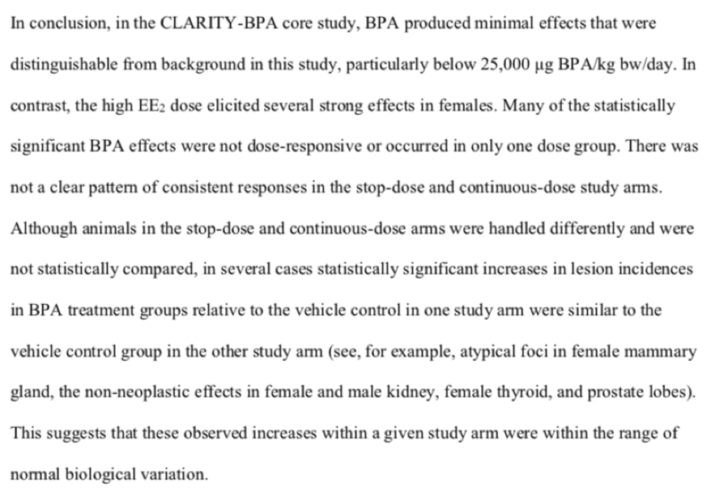
The draft Core Study was released for public comment in February 2018. The draft conclusion — that there are no discernible effects of BPA — is below:
In addition to the CORE study, 13 academic researchers received about $8 million in funding to participate in CLARITY. To avoid researcher bias, the academic researchers received coded animals so they would not know which BPA dose group any animal came from. They were then required to upload their raw data to a government database before the code could be broken and dose group details were disclosed to them. After disclosure the researchers were able to analyze their data.
While all thirteen academic researchers have completed their work, the results from only five of the thirteen researchers have been published since 2015. Consistent with the CORE study, no-to-minimal effects were reported in those studies.
Below are the 13 academic researchers, their areas of research for CLARITY.
The bolded academics have not published their results as of February 2019.
Obstructive voiding disorder – Fred vom Saal, University of Missouri
Testes function – Kim Boekelheide, Brown University
Ovarian dysfunction and abnormal hormone levels – Jodi Flaws, University of Illinois at Urbana-Champaign
Neurobehavioral effects – Heather Patisaul, North Carolina State University; Cheryl Rosenfeld, University of Missouri.
Immune dysfunction – Norbert Kaminski, Michigan State University
Metabolic disease – Andrew Greenberg and Beverly Rubin, Tufts University
Obesity – Nira Ben-Jonathan, University of Cincinnati
Cardiovascular effects – Scott Belcher, University of Cincinnati
Thyroid effects on brain and intestine – R. Thomas Zoeller, University of Massachusetts, Amherst
Mammary – Ana Soto, Tufts University
Uterus – Shuk Mei Ho, University of Cincinnati
Prostate – Gail Prins, University of Illinois at Chicago
The eight researchers who have not published their results have been critics of BPA in the past and should be motivated to publish their results if they indicated that BPA was not safe. But so far – just silence. It should be noted that academic researchers Fred vom Saal and Ana Soto were originally featured in “Our Stolen Future.”
The Grantee Studies data is scheduled to be released in August 2018. The final BPA-CLARITY report is scheduled to be released in August 2019.
The Sperm Count Controversy
In 1992, Danish research Niels Skakkebaek reported, “There has been a genuine decline in semen quality over the past 50 years. As male fertility is to some extent correlated with sperm count the results may reflect an overall reduction in male fertility. Citing three studies, including a 1990 study by John McLachlan (of retracted Tulane study infamy), Skakkebaek concluded his study with, “Whether estrogens or compounds with estrogen-like activity (as proposed by some) or other environmental or endogenous factors damage testicular function remains to be determined.”(47)
By 1993, Skakkebaek had fully subscribed to the endocrine disruptor scare in an article in The Lancet:, “We argue that the increasing incidence of reproductive abnormalities in the human male may be related to increased estrogen exposure in utero, and identify mechanisms by which this exposure could occur.”(48)
Theo Colborn embraced Skakkebaek’s claims in “Our Stolen Future.” Although Colborn noted that Skakkebaek’s claim “is still meeting with a skeptical response in parts of the medical community,” she dismissed the skepticism by comparing it to “similar disbelief at the first news that a dramatic hole had developed in the Earth’s protective ozone layer over Antarctica…”(49)
State of California researcher Shanna Swan joined the sperm count fray in 1997 with her 1997 study in Environmental Health Perspectives that claimed, “This analysis demonstrates that the decline in sperm density reported by [Skakkebaek in 1992] is not likely to be an artifact of bias, confounding or statistical analysis.” Swan declined to address the “cause(s) of the decline.”(50)
Swann tried to tie the alleged decline in sperm count with exposure to pesticides in a 2003 Environmental Health Perspectives study. She reported lower sperm counts among sperm donors in rural, agricultural Columbia, Missouri versus donors in more urban areas like Los Angeles and New York City.(51)
Swann and Skakkebaek have been at it ever since, constantly claiming that sperm counts are declining and that endocrine disruptors might be responsible.
Toxicologist Stephen Safe has been skeptical of the claims of Skakkebaek and Swan. In 2012, Safe wrote, “The initial endocrine disruptor hypothesis which suggested a link between in utero exposures to estrogens and decreased sperm counts is not supported by most studies but is still championed by Skakkebeck and some of his co-workers…”(52)
Safe added, “The claims and controversies regarding EDCs have continued for almost 20 years and there are no signs of resolution. It is noteworthy that two preeminent reproductive biologists who have made highly significant contributions to this field have developed skepticism on the claimed effects for BPA… In a commentary, Sharpe, a coauthor of the initial endocrine disruptor hypothesis, clearly answered in the affirmative the title of his highlight ‘Is it time to end concerns over the estrogenic effects of BPA?’”
Sharpe was Skakkebaek’s co-author on the initial 1992 study.
Maugh T, Chemical carcinogens: how dangerous are low doses? Science 06 Oct 1978: Vol. 202, Issue 4363, pp. 37-41. http://science.sciencemag.org/content/202/4363/370.
Ames B et al. Dietary Pesticides (99.99% all natural). Proc Natl Acad. Sci Vol. 87, pp.7777-7781, October 1990.
Crump K et al. Estimates of the proportion of chemicals that were carcinogenic or anticarcinogenic in bioassays conducted by the National Toxicology Program. Environ Health Perspect 1999 Jan;107(1):83-8.
“This project was supported by Contract No. CX 824040-01-0 between the National Academy of Sciences and the U.S. Environmental Protection Agency and the U.S. Centers for Disease Control and Prevention, and Cooperative Agreement No. 1445-CA09-96-0027 between the National Academy of Sciences and the National Biological Service of the U.S. Department of the Interior.” https://www.nap.edu/read/6029/chapter/1#ii
Thomas KB and T Colborn. Organochlorine endocrine disruptors in human tissue. Pp. 365-394 in Chemically Induced Alterations in Sexual Development: The Wildlife/Human Connection. T Colborn and C Clement, eds. Princeton NJ: Princeton Scientific Publishing.
Colborn T, FS vom Saal and AM Soto. Developmental effects of endocrine disrupting chemicals in wildlife and humans. Enviro Health Perspect 101(5):378-384 1993.
From the H. Rept. 104-669 – FOOD QUALITY PROTECTION ACT OF 1996 (https://www.congress.gov/104/crpt/hrpt669/CRPT-104hrpt669-pt1.pdf): “The Committee is aware of recent scientific reports indicating that some pesticides may imitate, enhance, or block the activity of hormones in humans and wildlife. For example, a linkage has been suggested between human exposure to chemicals that imitate estrogen and breast cancer. Since hormones govern fundamental bio- logical functions such as reproduction, growth, and metabolism in humans and other species, the Committee believes that it is important for EPA to obtain data about the potential hormone-disrupting effects of pesticides in order to make informed regulatory decisions under FIFRA. The Committee notes that the Agency has commissioned a report from the National Research Council to examine the issue more closely and identify data gaps that exists in current testing requirements. The Committee has reviewed and considered this issue and has determined that the EPA currently has sufficient authority to request information related to such effects. The Committee recognizes there are efforts ongoing to design and implement research to objectively assess and characterize the risk of endocrine disruptors on human health and the environment. Therefore, the Committee expects the Agency, within 4 years of the date of enactment of this Act, to evaluate the need for and, if necessary, to use its existing authorities under sections 3 and 4 of FIFRA to establish standards for data requirements, to determine whether a pesticide can disrupt hormonal activity. Collection and analysis of data specified in EPA standards related to disruption of hormonal activity should not delay reregistration eligibility decisions for pesticides first registered before 1984.
Over these many years I have noticed a pattern of activity that I find sort of fascinating. Scares will ebb and flow, but never really go away. Even after an issue has been raised and dealt with it's clear activists keep these issues on the back burner for future reference, as if everyone will forget what the facts actually were. And to some extent they're right, because there will always be a new crop of young misinformed and uninformed potential acolytes they can gull into the green movement. Young people in search of some sense of worth. Searching for something in which they can believe. Clearly a failure of religion in America today.
As a result, environmentalism has become today’s secular religion, thus, they are susceptible to the Kyrie Eleison of environmentalism. Drinking the Kool Aid they soon become sickened breathing in the fumes from the fever swamps of that movement. It fills them with arrogance and a sense of self-righteous indignation at the rest of the world that no amount of valid scientific information or rational observation can cure.
I keep hearing all sorts of claims by activists and government grant chasing “scientists” that chemicals (especially pesticides) cause cancer, autism, low sperm count and a host of other unproven scares. This has been particularly true of DDT. More outrageous claims have been made against DDT than almost any product that has ever been developed, with the possible exception of bisphenol A (BPA) and phthalates. Do chemicals really cause a drop in sperm count? Finally we can answer with a resounding NO!
In 2007 the American Council on Science and Health cited a study that clearly demonstrated that:
“the 1992 study by a group of Danish researchers that claimed sperm counts declined by 50 percent worldwide from 1938 to 1991”, was wrong! They point out that the study was “heavily criticized for its many flaws, methodological problems, and biases” at the time. “We know that the so-called decline in sperm count is just another myth promulgated by the ‘our stolen future’ crowd who say that environmental chemicals lead to infertility in men,” says ACSH's Dr. Gilbert Ross. “But now we have proof that’s simply not true.”
This leads us to DDT, which was banned by the first administrator of the EPA, Bill Ruckelshaus in 1972. And yes….it was a ban. It is true that there were exceptions written into the ban, and yes, it is true that this ban in the U.S. was not incumbent on other nations, and yes it is true that it was not a worldwide ban…..on paper. However, so much economic pressure was placed on countries that didn’t ban it outright that it became a de facto ban in all but a few nations.
Lower sperm count was one of the claims, and yet the generation of parents who were most heavily exposed to DDT were the parents of the baby boomers. Even if there was a valid study that could show this today (which there isn’t), that study wasn’t available when the ban was imposed.
Most studies are filled with weasel word and phrases. Then there are the “conclusions in search of data” studies, much like the Hungarian studies of Trajan and Kemeny published in 1969. Using only 3 ppm in the food per day this dose was fed to five generations of inbred Balb/c mice. They claimed a higher incidence of leukemia in the test subjects over the control animals. They also claimed they started with a leukemia free strain, yet there were incidents of leukemia in the controls.
So what was disturbing about this study? Other researchers working with comparable dosages with animals of any species or strain showed no incidences of cancer of any type. The skepticism warranted an investigation into this puzzle.
Although everyone agreed something went wrong in their study they couldn’t definitely point out what went wrong. However it was shown that there were design problems in the study and there was a possibility of aflatoxin (an absolutely known carcinogen) contaminated food.
Modern studies seem to have much the same problem. Conclusions in search of data! The question I keep asking is this. If DDT was banned for scientific reasons that were obvious, factual and could be replicated; then why have they been studying it since 1972 to prove that it does________(fill in the blank).
Millions have been spent on studies that have been conclusions in search of data. The mere fact that so much has been spent after the ban to prove that the ban was proper is a good indicator that everyone….and I mean everyone, on both sides of this issue, know that the science was weak or invalid, and the decision to ban DDT was a political one.
The real problem with the ban on DDT isn't the fact that we lost DDT. Why? Technically it didn’t matter (at least in the developed world) because we had a large arsenal of products to defend society’s health, food and property.
Philosophically it was devastating because it became the basis for all that has come into being since then. All those tools have come under attack, and as a result we have lost important chemistry. First it was the chlorinated hydrocarbons, then it was the organophosphates and carbamates and now the pyrethroids and rodenticides are under attack. All of this goes back to the ban on DDT. That ban laid the foundation for the financial and legislative power of the environmental movement. The ban on DDT needs to be overturned for that reason alone.
Paracelsus famously noted that the dose makes the poison.
His wisdom has been accepted for centuries, from the least educated to the most. At least until about 25 years ago, when environmental activists decided that there is instead a u-shaped curve for chemicals (1) they wanted to raise money scaring people about. At high levels a chemical can be toxic, sure, toxicologists, biologists, and chemists all accept that, but at low levels they aren't, so to get around that activists began using proxies and suggesting correlation. (2) And then some modern academics are able to fool people while armed with gavage tubes and cell cultures and science terms that have a ring of truthiness; like that any "toxic chemical" can change hormones, no matter the concentration.
That hasn't worked very well for them and the reason the public remains unconvinced is the American Council on Science and Health. We have been debunking these kinds of junk science claims since 1978. While I write this, the coffee I am drinking has changed my hormones. It's detectable. And coffee is toxic. Have you seen the LD50 of caffeine? In rats, it's 10X as deadly as the weed killer glyphosate (3), which has activists and trial lawyers suing companies in California. (4) If you are selling fear and doubt, the presence of any pathogen is equal to pathology - if you can detect a drop in 160 Olympic-sized swimming pools full of water, and you can't say it is bad scientifically, you can instead claim that it "changes" the water.
If that sounds like homeopathy, they do share a lot in common.
And that is the credibility problem chemical activists like Pete Myers and Andreas Kortenkamp and Gilles-Eric Seralini and Christopher Portier face when trying to get attention for their beliefs; they have to say that Paracelsus is wrong. They have to throw out science and replace it with mysticism. Just like homeopaths do.
Since promoting the belief that any hormone change is bad hasn't worked they have instead been claiming that a "cocktail" of harmless chemicals is somehow doing something greater than the individual harmless chemicals can. Instead of water memory, the toxic cocktail myth claims that 5 or 10 or 100 different trace chemicals together "add up" to cause greater problems than if those same trace chemicals were given in sequence. To toxic cocktail believers, adding 100 things that are 0.000000001 all at once is going to give a different result than adding 0.000000001 in sequence 100 times. If they do it all at once, they claim, the harm is real whereas in sequence they concede the harm is not present.
They don't just deny chemistry, toxicology and biology. They deny simple arithmetic.
But denying arithmetic is what toxic cocktail activist Andreas Kortenkamp does in a new letter ("Perspectives" section) in Science, written with fellow environmental activist Michael Faust. What is their evidence for a toxic cocktail dooming us all? They don't provide any citation when they write "Scientific evidence for heightened toxicity from such mixtures is mounting" and editors at Science didn't ask awkward questions that real science journalists would have asked like, 'ummm, is this supposed evidence actually just crappy conspiracy papers in Environmental Health Perspectives and Endocrine Connections magazine?' Given that the letter had little editorial scrutiny, they were able to nonchalantly claim that while NOAELs (no observed adverse effect levels) may not show harm from trace chemicals, that is because other scientists - hundreds of thousands of other scientists in an overwhelming consensus - simply don't understand additive power. And government is in the pocket of Big Chemical and therefore doesn't demand they test all the possible combinations together.
There is a reason Kortenkamp is on the conspiracy side and science is opposed to him. Dose Addition works. That science is settled. His belief that trace chemicals in a "cocktail" cause endocrine disruption is not based on anything but ideological voodoo.
He has an advanced degree so he must understand the concept of hormones and binding affinity and that measures in urine say nothing at all about absorption. Yet he ignores those inconvenient truths that have debunked this scaremongering time and again in their recent op-ed.
How can the public easily know they are being duped by that kind of truthiness? When the claims don't pass the four word test for harm: Where are the bodies?
There are none. We are healthier than ever.
Still, they ignore that and go on to suggest that governments force companies to test every chemical in every possible combination with every other chemical, because by doing so they can insure no chemical is ever approved - unless it is a chemical in a natural product that they want exempted from scrutiny. The kinds of "natural" and "organic" products promoted by groups that fund Kortenkamp and Faust and Pete Myers.
Scaremongering does nothing to help the public. Science magazine is actually promoting public distrust in science by giving this warmed-over conspiracy theory a new air of legitimacy.
Unfortunately this continues their recent pattern; they are regularly reprinting anti-science activist op-eds. AAAS, which publishes Science, is run by a politician, but that doesn't mean they should become overtly anti-science in the interest of shoring up their plummeting subscription memberships by appealing to the beliefs against science of one party.
We have been debunking toxic cocktail hype forever and endocrine disruption hype since 1999. You can even read our first book on it for free here. Thanks to all you readers and donors for continuing to make it possible.
NOTES:
(1) A u-shaped curve means that a chemical will have a response that varies from high to low to high as concentration increases. It defies the principles of modern pharmacology. Philip Landrigan, epidemiologist and pediatrician, is the go-to guy for the New York Times when they claim this sort of thing. (2) Yes, they are suing over coffee also, California is a good state for anti-science beliefs because they abdicated their regulatory system to activist epidemiologists in France. (3) It's even on our coffee mugs.
(4) An actual paper claimed living near farms caused autism - because pesticides. The authors did not actually test for any pesticides in anyone, they instead created a proxy. They took California pesticide applications and matched them to autism diagnoses to create a correlation.
Basically, proxies can do anything if someone wants to do advocacy rather than science. All you need is a small sample size and willingness to accept inconsistent data, like that near and far applications of pesticides caused harm but in the middle made no difference - a u-shaped curve for autism. Which principal investigator Irva Hertz-Picciotto of U.C. Davis readily did. Without disclosing her two conflicts of interest, which were leadership in an autism group and an anti-chemical group.
Everything we are told should bear some resemblance to what we see going on in reality.
By Rich Kozlovich
I originally published this on Thursday, June 30, 2011 under the title, This is For Jenni . I think its worth updating and repeating now. RK
Occasionally when talking to people about pesticides and chemicals in general I find that some have a smattering knowledge about studies that make all sorts of claims about chemicals and pesticides in particular.
The reality is that 10,000 poorly designed studies with weak associations filled with weasel words and assumptions (and possibly outright fraud such as the Tulane endocrine disruption study) amount to nothing more than “conclusions in search of data”; and they are not worth one well designed study that is “data in search of a conclusion”. In short….they lie. Lies of commission and lies of omission. As my friend Dr. Jay Lehr says; they don’t get government grant money unless they give these people what they want. Government grant money has turned the term “scientific integrity” into an oxymoron. When science gets rich, it gets political.
There are a number of articles I wish to highlight in this post dealing with two issues. Pesticides and IQ, and pesticides and endocrine disruption. In the developed world, where pesticides were used the most IQ's have up over the last fifty years. (Editor's Note:Currently that's reversing worldwide. RK)
As for sperm count issues - one of the many fallacious knocks on DDT was that it causes a loss of sperm count. Even if this was true, it doesn’t seem to much matter because the generation most heavily exposed to DDT was also the generation that created the baby boomers.
At the end of WWII the world’s population numbered around two billion people, and it took thousands of years to accomplish that. The world’s population has soared to almost seven billion in less that seventy five years. The reality is this; everything we are told should bear some resemblance to what we see going on in reality.
Dr. Gil Ross, M.D. of the American Council on Science and Health recently wrote an article called, “Better Living Through Chemistry (If Permitted)”, Ross states: “The overwhelming body of scientific evidence supports the safety of myriad chemicals in use today. A fusillade of recent items by the New York Times, US News, CNN, and others purports to show how certain common pesticides lead to reduced IQ's among children of women exposed to these chemicals while pregnant.”
He goes on to say:
“Dismayed, I carefully went over the paper that lies at the ground zero of the media frenzy. It is a study of the organophosphate (OP) class of pesticides by a group of researchers based at the University of California at Berkeley and led by Brenda Eskenazi.”
Furthermore:
“Analogously, pesticides kill pests—insects, weeds, fungi—and increase crop yields and the safety of our food. Yet the anti-pesticide, anti-chemical, anti-technology crowd says the opposite.” “These same “friends of the earth” oppose genetically modified (or biotech) agriculture, again for no science-based reason. This technology is another potential method to increase production of desperately needed staple crops—yet the opposition stems from a fear of “frankenfoods,” despite these crops’ demonstrated safety over the past 15-plus years—echoing the never-ending crusade against DDT”
Ross continues:
“It was a sign of things to come, as the EPA expanded its search for “toxic” problems to fix—even if it had to invent them. Now the law of diminishing returns has set in: fewer serious (or even real) problems to fix, so the search for “toxins” to justify the huge EPA budget has become increasingly desperate. Is this know-nothing obstructionism what being “earth-friendly” means today?”
I keep hearing all sorts of claims by activists and government grant chasing “scientists” that chemicals (especially pesticides) cause cancer, autism, low sperm count and a host of other unproven scares. This has been particularly true of DDT. More outrageous claims have been made against DDT than almost any product that has ever been developed, with the possible exception of bisphenol A (BPA) and phthalates. As for claims that there has been a drop in sperm count over these many decades. Gil posted an article dealing with this issue.
In one of this week’s Daily Dispatches the American Council on Science and Health cited a study that clearly demonstrated that:
“the 1992 study by a group of Danish researchers that claimed sperm counts declined by 50 percent worldwide from 1938 to 1991”, was wrong! They point out that the study was “heavily criticized for its many flaws, methodological problems, and biases” at the time. “We know that the so-called decline in sperm count is just another myth promulgated by the ‘our stolen future’ crowd who say that environmental chemicals lead to infertility in men,” ...........“But now we have proof that’s simply not true.”
So, do chemicals really cause a drop in sperm count? Although it was obvious for years that all these claims were junk science, we can finally answer with an absolute and resounding; NO!