Search This Blog

De Omnibus Dubitandum - Lux Veritas

Showing posts with label Josh Bloom. Show all posts

Saturday, October 5, 2019

Can Nuclear Waste Be Safely Transported?

By Josh Bloom — October 3, 2019 @ American Council on Science and Health

The National Museum of Nuclear Science
 & History near Albuquerque New Mexico.
 Don't Miss It.
The anti-nuclear crowd uses an assortment of scares to turn public opinion against the use of nuclear power, one of them being the risk of an accident when spent nuclear fuel is transported to where it is to be disposed of. Are they right? Or is it possible to safely move nuclear waste around?

Yesterday I learned quite a bit about this when I visited the National Museum of Nuclear Science & History near Albuquerque New Mexico. It's a fascinating museum full of amazing exhibits – a must-see for anyone in the area.

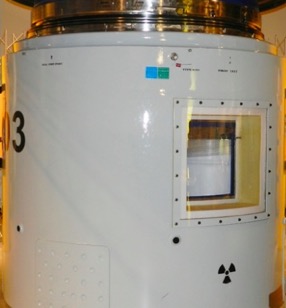
One exhibit demonstrates the conditions in which the containers used to transport nuclear waste must withstand without breaking open or exploding.


A nuclear waste container. The plexiglass window
 is not part of the container; it enables
people to view the contents of the container.
 

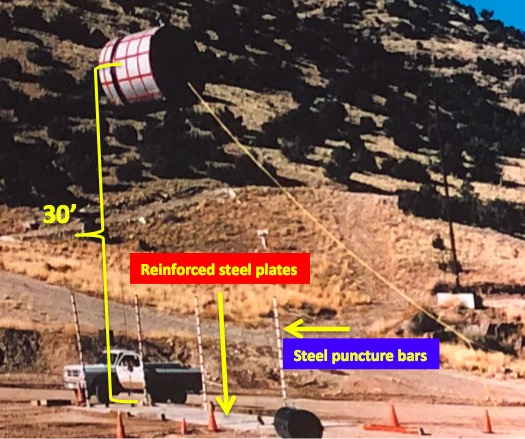
There are different types of nuclear waste with very different levels of radiation; the precautions for medical nuclear waste are less stringent than those for spent fuel from reactors. The containers used for the latter must withstand conditions that look like they might come from a Road Runner cartoon. Here are some of them.

Falls and punctures
  • Containers are cooled to -20°F.
  • They are dropped (in multiple orientations) from 30 feet onto an unyielding reinforced steel plate.
  • They are dropped multiple times onto 30 feet steel puncture bars.
There's more...

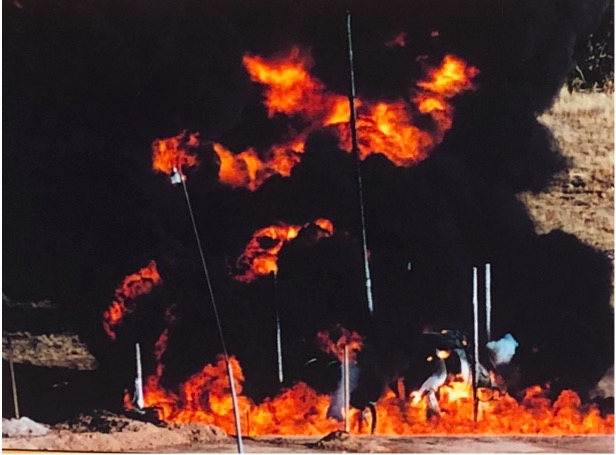
Fire and pressure
  • Containers are burned for 30 minutes in a pool of jet fuel at a temperature of 1425°F.
  • They are submerged in 50 feet of water (21 psi).


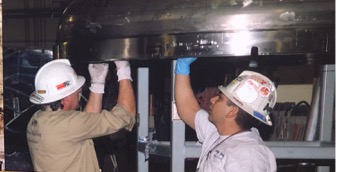
    • The container itself, as well as its contents, are tested to ensure that they are "leak-tight" according to criteria developed by the Nuclear Regulatory Commission. 
    Of course, none of these tests guarantee that there will be no accidents or release of nuclear contamination, but the record has been impressive so far. In 2013 there were two fires, one in a truck and the other on a ship that exposed the containers to high temperatures. Neither accident resulted in the release of radioactive material.

    Additionally, a 2016 report issued by the US Department of Energy Nuclear Fuels Storage and Transportation Planning Project concluded that "The quantity of [spent nuclear fuel] shipped worldwide to date is at least 87,000 metric tons of heavy metal" and "Review of the data sources shows that all of these shipments were undertaken without any injury or loss of life caused by the radioactive nature of the material transported. In general, there have been few transportation accidents worldwide in the history of transporting SNF, and none have had significant radiological consequences."

    Given the current emphasis on fuels and their environmental impact, the public should be aware of the real risks and track record of transporting nuclear waste. Barrels of spent uranium will not fall off the back of a truck and burst open in the middle of a city, nor will they explode or leak in a fire.

    ACSH has maintained for years that nuclear energy is clean and, with rare exceptions, safe. And it is now safer. (See my colleague Alex Berezow's companion piece on a new proposal for nuclear waste storage.)

    Neither wind nor sun is capable of meeting the world's energy needs. Dismissing the use of nuclear energy because of false or overhyped scares helps no one except the activists.

    Wednesday, October 2, 2019

    The EPA Grows A Pair And Takes A Stand On Glyphosate

    By Josh Bloom — August 13, 2019 @ American Council on Science and Health

    You might as well get pissed off in advance because if you don't much care for scientific evidence you're not going to enjoy this a whole lot. Sorry, but facts are facts, and in this case, the US EPA has them right while the State of California has them wrong.
     
    By any measure, California's Proposition 65 is an exercise in madness. 
     
    The law, which is officially titled "The Safe Drinking Water and Toxic Enforcement Act of 1986," was well-intended at the time it was written – to stop pollutants from being discharged into water. Now it has nothing to do with water; it is merely an excuse for predatory trial lawyers, to file lawsuits against companies, small and large, with the laughable goal of "protecting the public" by suing companies that fail to "warn the public" about harmless products like purses, shoes, Tiffany lamps, and bird feeders, as well as hotel rooms, and amusement parks.

    How, did these evil companies – many being small family businesses – fail to adequately warn us? By not putting an immensely stupid label on things that cannot possibly hurt you. (See Should California Put A Warning Label On Your Penis?). So it should not be surprising that California wants a Prop 65 label put on the controversial herbicide glyphosate.
     
    Except, the EPA doesn't see it that way when it comes to glyphosate (1). The agency recently announced that it would not permit California to put a cancer label on the chemical. And rightly so. 
    Some will write off the EPA's recent decision to reject a cancer warning label for glyphosate as partisan politics or big money influencing a government agency. It is neither. Instead, we are seeing a rare case of honesty that is based on scientific evidence, not nonsense. The EPAs decision is scientifically sound on every level. 
    "We will not allow California's flawed program to dictate federal policy,"
    EPA Administrator Andrew Wheeler 
    Good for him. Wheeler is dead-on. The "evidence" supporting the carcinogenicity of the chemical is not only flimsy; it is a product of fraudulent research by the International Agency on Cancer Research (IARC). Here is an excerpt from my colleague Dr. Alex Berezow's complete annihilation of IARC and its findings:
    "We now have an answer... The Times reports that Christopher Portier, a key IARC advisor who lobbied to have glyphosate listed as a carcinogen, accepted $160,000 from trial lawyers representing cancer patients who stood to profit handsomely by suing glyphosate manufacturers. Mr. Portier's failure to disclose such an obvious conflict of interest has exploded into a textbook case of scientific fraud."
    Dr. Alex Berezow, Glyphosate-Gate: IARC's Scientific Fraud, October 2017
     
    IARC's "evidence," such as it is, was the lone culprit in designating glyphosate as a carcinogen. Epidemiological studies have found no connection between cancer industrial workers who routinely handle the stuff. Biochemical assays that are suggestive of DNA damage or mutation all come up negative. Aside from IARC's made-up baloney, there are no valid animal studies that show that it causes cancer. Regulatory agencies from the US, Canada, the EU, France, Germany, Switzerland, New Zealand, Brazil, Japan, Australia, and Korea all state that glyphosate does not pose a risk of toxicity or carcinogenicity. 
     
    Yet, California, based on IARC's phony findings wanted to slap an incorrect label on it based on the findings of a corrupt group. 
     
    A rare win for science and a loss for faulty activism. How refreshing. 
     
    NOTE:
     
    (1) This week's announcement was not the first time that EPA has objected to the cancer label. In 2017 the agency released the Glyphosate Human Health Risk Assessment, which was a basis for the 2019 decision. 


    Monday, July 22, 2019

    Dr. Aric Hausknecht Responds to SG Jerome Adams' Tylenol Recommendation

    By Josh Bloom — July 12, 2019 @ American Council on Science and Health

    #Special to ACSH.

    ACSH friend Dr. Aric Hausknecht, a New York neurologist and pain management physician, has taken issue with the July 4th advice tweeted by Surgeon General Jerome Adams, M.D., which recommended the use of IV Tylenol for post-op pain.

    Dr. Hausknecht gave us exclusive permission to print his response to Dr. Adams.

    I am writing in response to recent comments made by the U.S. Surgeon General, Jerome Adams, regarding the use of intravenous acetaminophen for anesthesia and post-operative pain relief. The Surgeon General implies that acetaminophen (Tylenol) is equally efficacious to intravenous (IV) opioids for pain relief. Apparently, his comments are based upon, Comparison of the Analgesic Effect of Intravenous Acetaminophen and Morphine Sulfate in Rib Fracture; a Randomized Double-Blind Clinical Trial,  Emerg (Tehran). 2015 Summer; 3(3): 99–102. The authors of this paper concluded, "The findings of the present study showed that IV acetaminophen and morphine have the same therapeutic value in relieving the pain of rib fracture."

    However, this study was carried out on a limited population group, 54 patients in total, and the statistical analysis is of questionable validity. At best, this study establishes a need for further inquiry, but in no way does this study provide adequate evidence to use IV acetaminophen as a substitute for IV opioids.

    In another related paper, Intravenous versus Oral Acetaminophen for Pain: Systematic Review of Current Evidence to Support Clinical Decision-MakingCan J Hosp Pharm. 2015 May-Jun; 68(3): 238–247, the authors performed a literature review from 1948-2014 and "summarized and evaluated the available published literature describing efficacy, safety, and pharmacokinetic outcomes of randomized studies assessing oral versus IV dosage forms of acetaminophen." The authors concluded, "For patients who can take an oral dosage form, no clear indication exists for preferential prescribing of IV acetaminophen." On the basis of this comprehensive review, the authors concluded, "Therefore, on the basis of current evidence, if a patient has a functioning gastrointestinal tract and is able to take oral formulations, IV formulations (of acetaminophen) are not indicated."

    Additionally, IV acetaminophen is FDA approved for use in the management of mild-to-moderate pain and moderate-to-severe pain with adjunctive opioid analgesics. It is not clear why a physician who is in a position to shape public policy would recommend  standards of care that suggest that IV acetaminophen is equally efficacious to IV opioids when: 1) that premise is unproven, 2) there is strong evidence that oral acetaminophen is equally efficacious to IV acetaminophen,  3) IV acetaminophen should probably not be administered to a patient that can tolerate oral administration, 4) IV acetaminophen is not FDA approved as a stand-alone analgesic agent for mild-to-moderate pain and moderate-to-severe pain, and, 5) it is contrary to good and accepted medical practice that has established that opioids are more efficacious than acetaminophen for postoperative pain and for moderate-severe pain.
    I remain,

    Aric Hausknecht, MD
    Diplomate American Board of Psychiatry and Neurology
     
     
    And then to follow up

    US Surgeon Gen. Backpedals on Flawed Tylenol Study. Cause of ACSH.
    Dr. Jerome Adams celebrated Independence Day by trumpeting a study which concluded that Tylenol worked as well as morphine for controlling the pain from a broken rib. But the study was complete nonsense. ACSH caught the Surgeon General and now he's backpedaling like the woman in the bicycle scene from The Wizard of Oz (played backward of course)..............To Read More.....

    Please Help Fund Our Work - If you follow our work, you know that we here at ACSH go after the fraudsters, the hucksters and the snake-oil peddlers. And when we're not debunking their misleading or dangerous junk science, we're always aiming to give you the most accurate and dependable health news. But we can only continue to do that with support from our readers and friends who value what we do. So if you can ... Please Donate. Thank you.

    How Toxic Is Sumithrin (Anvil) Mosquito Spray?

    By Josh Bloom — July 17, 2019 @ American Council on Science and Health

    It's mosquito season in the Northeast and we had a very wet spring. Which means there are going to be 1) a whole bunch of mosquitoes, and 2) a whole bunch of people arguing about whether to spray them or not. The purpose of this article is to examine the toxicology of Sumithrin – the active ingredient in the commonly used insecticide Anvil – and come up with a realistic picture of whether Sumithrin is a deadly poison, a non-toxic chemical, or something in between.

    Sumithrin, aka d-phenothrin, is a commonly used insecticide which belongs to the pyrethroid family of chemicals – synthetic analogs of the chemicals that are found in chrysanthemum flowers that the plant makes for self-protection against insects (1). Sumithrin is a general-purpose insecticide; it is used to kill or control fleas, scabies, and head lice. It also kills ticks—a benefit I’ll discuss later.

    There are a number of standard methods used to determine the risk of chemicals. Here are some of the most widely used.

    1. ACUTE TOXICITY

    One way to gauge the toxicity of a chemical is to determine the amount of it required to kill 50% of a group of lab animals (usually rats and mice) with a single dose. This measurement is called the LD50, which is short for Lethal Dose 50%. The LD50 is expressed in milligrams per kilogram (mpk) of body weight of the animal. For example, if Chemical X has an LD50  of 10 milligrams per kilogram, then the dose of the X required to kill half the rats would be 5 milligrams (an average rat weighs 0.5 kilograms). If Chemical Y has an LD50 of 2,000 mpk this means that it would take 100 mg of Y - about 20% of the body weight of the animal - to kill half the rats. This is an enormous dose for a rat or any other mammal.

    So, a high LD50 means that the chemical in question has low toxicity. Conversely, a low LD50  indicates that the chemical has significant toxicity. Although LD50 values in rodents cannot be directly converted to a lethal dose in humans, they serve as a rough approximation of human toxicity, especially when these values are consistent across a number of different animal species. So, it would be incorrect to say that the lethal dose of Chemical X, which is 5 mg in rats, would be 700 mg in humans (average weight 70 kilograms). But it would be fairly safe to conclude that Chemical X will be more toxic to people than Chemical Y, and probably by a lot.

    LD50 VALUES OF SOME CHEMICALS AND DRUGS

    The scientific literature contains an enormous amount of data on the toxicity chemicals. One especially useful source is TOXNET, an NIH website which contains toxicity and carcinogenicity data, etc. on 400,000 chemical compounds. All of the toxicity data contained in this article is derived from the TOXNET database.
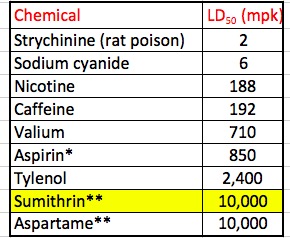
    Figure 1 contains rat LD50 values for selected chemicals and drugs.

    Figure 1. LD50  values of sumithrin and other representative chemicals and drugs. Strychnine (top) is the most toxic chemical in the group. Toxicity decreases from top to bottom.

    * The value for aspirin is the average of two peer-reviewed studies.

    ** The LD50 values of sumithrin and aspartame (NutraSweet) are not 10,000 mpk; they are higher than that. No lethal dose in rats could be identified for either chemical, so the value is usually written as >10,000. When something has an LD50 of >10,000 the only way it will kill you is if you get run over by a truck carrying it.

    Of the nine chemicals and drugs listed in Figure 1 acetaminophen (Tylenol) is the least toxic, with the exception of aspartame and sumithrin, which are non-toxic. Calculating a lethal human dose, as I mentioned before, cannot be done by using the same LD50 value and adjusting the dose size from rats to humans. But just to illustrate the lack of acute toxicity of sumithrin, I did the "math" anyhow. If rat LD50 values were the same as those of humans, then the toxic dose of sumithrin in people would be 182 grams - 36 teaspoons. You are unlikely to eat 36 teaspoons of permethrin.

    2. CUMULATIVE EXPOSURE

    Most people have an incorrect impression about everyday chemicals that we are exposed to. They believe that we live in a cocktail of toxic substances, which build up in our bodies and that this is responsible for the surge in cancer rates we are now seeing. There are two problems here:

    1. There is no surge of cancer rates. They have remained steady or slightly declined over the past 24 years.
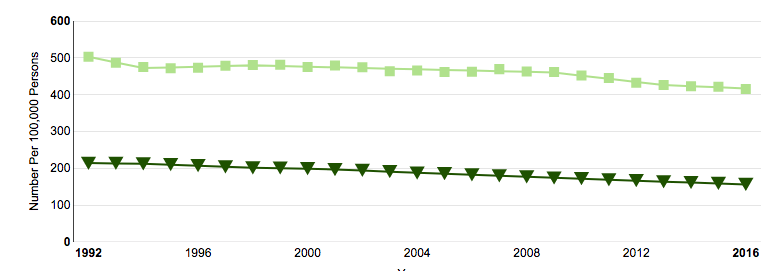


    Age-adjusted incidence (top) and mortality (bottom) of all cancers (per 100,000 people) between 1992-2016. Source: Cancer Stat Facts: Cancer of Any Site.

    2. With few exceptions, chemicals do not accumulate in our bodies. This is because of our livers – the primary site of metabolism of drugs and chemicals, natural or synthetic – break down the chemicals or drugs that pass through them, converting these substances into water-soluble metabolites that are usually excreted in the urine.

    Sumithrin, like most chemicals, does not bioaccumulate. In rats, the half-life in blood is about one hour (rapid metabolism), meaning that after one hour half of it is gone and after 8 hours (four half-lives) almost all of the sumithrin is gone. Even after administration of a single 200 mg dose (2% of the weight of the rat), more than 95% of the chemical was metabolized and eliminated after 48 hours.

    Also, keep in mind that these numbers represent the fate of sumithrin when taken orally. Sumithrin is not very efficient in penetrating the skin, so skin exposure will give low blood levels to begin with.

    Even though the chemical has very low toxicity when inhaled by rats, when it is inhaled in large quantities by humans, sumithrin can cause "nausea, vomiting, throat irritation, headache, dizziness, and skin and eye irritation," but the hysteria surrounding spraying is unwarranted. According to data from the Poison Control Center between 1992-2005, there was an average of 180 exposures per year with only 25% of these (45) resulting in symptoms (2). So it is not surprising that a 2011 paper, "Bystander Exposure to Ultra-Low-Volume Insecticide Applications Used for Adult Mosquito Management," concluded:
    "Our results support the findings of previous risk assessments that acute exposures and risks to humans from [Ultra-Low-Volume] insecticides are well below regulatory levels of concern." C. Preftakes, et.al, International Journal of Environmental Research and Public Health. 2011 Jun; 8(6): 2142–2152.
    3. A LITTLE DOES NOT EQUAL A LOT

    Paracelsus, the "father of toxicology."
    Image: Wikipedia
    Although this statement seems self-evident, it is mind-boggling how often people get it wrong by failing to differentiate between the biological effects of trace quantities and a bottle full of the same chemical, even though in the 16th century the Swiss physician Philippus Aureolus Theophrastus Bombastus von Hohenheim, aka, Paracelsus, coined the phrase "All things are poison, and nothing is without poison, the dosage alone makes it so a thing is not a poison," which has been shortened to "the dose makes the poison"

    This simple adage is the main reason that sumithrin can be sprayed to kill mosquitoes while sparing humans. Common mosquitoes weigh 2.5 mg. An average human weighs 70 kilograms, which is 28 million times more than the mosquito.

    This is why such insecticides can be toxic to bugs but not toxic to people, but it is not the only reason. It is also known that mosquitoes metabolize sumithrin more slowly than humans, so it builds up in the bugs but not in people (3).

    4. CARCINOGENICITY

    There are a number of ways to evaluate whether a chemical will be carcinogenic in humans. Here are the two most important:

    1) Genotoxicity (DNA damage). Chemicals that damage DNA always raise a red flag because gene damage can be a precursor to cancer. Many experimental drugs have met with an untimely demise because of a positive Ames test (3). Although not all chemicals that are genotoxic are carcinogens, most carcinogens are genotoxic. There are a number of other lab tests that are used to determine the possible carcinogenicity of chemicals.

    2) High dose rodent studies. Rat models of cancer are notoriously awful. Part of the reason is that rats are not little humans, but the primary reason is the way the tests are conducted. Typically, rats are fed a very high dose – much higher than a human will ever be exposed to – for their entire lives (two years) and then examined for tumors. Although this model is clearly unrealistic, the high dose feeding is only part of the problem. The choice of rats is the other. The Sprague-Dawley rat is frequently used for this experiment; this rat is bred to easily develop tumors, so much so that the control animals (not given the chemical being tested) develop so many tumors that it can be difficult to determine whether a chemical caused the tumor or the rat developed it on its own.

    Sumithrin is neither genotoxic nor carcinogenic. There is no agency, US or international, that lists the chemical as a possible carcinogen. Even California's insane Proposition 65, which requires cancer warning labels on hundreds of chemicals (also on hotel rooms, in cars, handbags...and much more) does not contain sumithrin. But the list does contain alcohol – a known human carcinogen. It would be unusual to see people hiding in their homes with the windows closed and air conditioners running when people walk by drinking beer.

    5. OTHER LIFE FORMS

    Sumithrin is more toxic to dogs and (especially) cats than it is to rodents, birds, or humans. The primary routes of exposure include flea collars and indoor foggers. Sumithrin is highly toxic to bees, fish, and amphibians. It should not be sprayed in waterways.

    6. PERSISTENCE IN THE ENVIRONMENT

    Sumithrin decomposes to non-toxic breakdown products within a few hours (in the air) and less than a day on the surface of plants. Its half-life in soil is 1-2 days and it is not water-soluble, so groundwater contamination is unlikely.

    7. TO SPRAY OR NOT TO SPRAY

    It is easy to conclude that any given chemical or drug should not be used if one examines only the risks of using it without considering the risks of not using it. Both mosquitoes and ticks are vectors for numerous (and emerging) bacterial and viral infections and when they are not controlled, human disease will inevitably result.

    West Nile (mosquitoes) and Lyme (ticks) are well-known, but other pathogens transmitted by mosquitoes can be deadly. Chikungunya virus, once rare to the US, is now found in 35 states. The infection is rarely fatal but can be incapacitating for weeks. Dengue virus is endemic to Africa but has now been found in Texas, Hawaii, and the Florida Keys. Eastern Equine Encephalitis (EEE) perhaps the most dangerous of all mosquito-transmitted diseases, so much so that it is considered to be a potential bioterrorism weapon. It is spread to horses and humans by mosquitoes. Although still rare, the fatality rate for infected humans is 50-75%. Zika, which causes severe birth defects in the babies of infected mothers, Western Equine Encephalitis, St. Louis Encephalitis, and LaCrosse Encephalitis are still uncommon but all are now found in the US. All of these viral infections are spread by mosquitoes. (5)

    In addition to Lyme, ticks spread a number of viral infections, such as Rocky Mountain Spotted Fever, Colorado Tick Fever, and Powassan Encephalitis.

    At the heart of this controversy is the fallacy that "natural is better." It is not, despite the brilliantly successful advertising campaign of the organic food industry, copycat traditional food manufacturers which have hopped on the bandwagon, and the dietary supplement industry, which has pushed such ridiculous claims to the point where they resemble satire. The only difference between "natural" substances and their man-made counterparts is the source of the chemical or food. Your body cannot tell the difference between a chemical from a grape or one from a lab. All that counts is the properties of the chemical in question. Virtually all of the "natural" Vitamin C you buy comes from factories in China, where it is manufactured from glucose. Yet, it is no different from Vitamin C extracted from oranges.

    Public health decisions require sound science, not reflexive reactions based on misinformation, ignorance, or personal beliefs. Whether the issue is vaccination or pest control, feel-good, easy-sounding memes may be attractive alternatives to actual facts, but in the absence of sound science the easy answer is usually the wrong answer.

    NOTES:

    (1) Insecticide marketers engage in a sleight-of-hand by saying pyrethroid insecticides are in the same chemical family as the natural pesticides from chrysanthemums. This is technically true, but meaningless. It implies that the insecticides are somehow safer because they are "related" to chrysanthemums. That is nonsense. Each pyrethroid has its own toxicity profile. Sumithrin is safe because it is non-toxic, not because it is structurally similar to the natural insecticides.

    (2) Reference: d-Phenothrin (Sumithrin®): Occupational and Residential Exposure Assessment for the Reregistration Elibibility Decision (RED); U.S. Environmental Protection Agency, Office of Prevention, Pesticides and Toxic Substances, Office of Pesticide Programs, U.S. Government Printing Office: Washington, DC, 2007; pp 1-23.

    (3) Another "active" ingredient found in Anvil insecticide is piperonyl butoxide.
    Piperonyl butoxide is not an insecticide, rather, it inhibits the enzyme that clears sumithrin from the mosquito, making it more effective. Piperonyl butoxide is neither toxic nor carcinogenic. There is one case report of a fatal overdose, but the victim drank between one pint and one quart of the chemical.

    (4) The Ames test, a widely used and important method for determining carcinogenicity uses bacteria to test for the ability of chemicals to mutate genes. It was invented by biochemist Dr. Bruce Ames in the 1970s. Ames was one of the founders of ACSH.

    (5) This information is available from the American Mosquito Control Association, a non-profit group funded by the CDC.

    Please Help Fund Our Work - If you follow our work, you know that we here at ACSH go after the fraudsters, the hucksters and the snake-oil peddlers. And when we're not debunking their misleading or dangerous junk science, we're always aiming to give you the most accurate and dependable health news. But we can only continue to do that with support from our readers and friends who value what we do. So if you can ... Please Donate. Thank you.



    Friday, November 23, 2018

    Thanksgiving Dinner Chemical Terrors In Every Course - 'Organic' Or Not

    By Josh Bloom — November 17, 2017 @ The American Council on Science and Health

    The traffic on Thanksgiving is killer. If you happen to be driving to Aunt Wilma's in Connecticut you will find this out for yourself. But what about when you arrive? Which is riskier? The trip or the meal (1)?

    Of course, there is no right answer here, but one thing is for certain: Unless your Thanksgiving meal consists of distilled water, you are going to be eating some toxic chemicals, and it doesn't matter whether the turkey is "organic" or not. Or anything else in the meal. So I thought it might be sort of fun to take each course and arbitrarily select one of many chemicals that is in that course. Then let's take a look at what the professional chemical scaremongers have to say about each. Bon appétit!

    First course: Wine (sulfites)

    Wine contains hundreds of chemicals with ethanol (a known carcinogen) being the most obvious. But it also contains sulfites, especially red wine. Sulfites are a form of sulfur dioxide and are commonly used as preservatives for dried fruit. Since all preservatives are evil, it should come as no surprise that the Natural Resources Defense Council, a.k.a. "The Empire of Ignorance," doesn't regard sulfites so highly. A 2013 article entitled "USFDA Allows Chemicals in Food Despite Lack of Toxicity Testing" by Jennifer Sass, who fancies herself as a toxicologist, (2) has all kinds of icky things to say about sulfites:
    • Sulfites were banned by FDA in 1986 for use on fruits and vegetables that are eaten raw
    • They are also approved by EPA as pesticides.
    • They induce allergy-like reactions in many people.
    • When FDA approved their use as a food additive in the 1970s, sulfites were deemed to be Generally Recognized As Safe (GRAS) and exempted from FDA premarket approval requirements. 
    • Sulfites are called ‘food additives’. In other contexts, the same chemicals may be considered industrial chemicals or pesticides
    Jennifer Sass, NRDC, 2013
    Uh oh. Better ditch the wine. What can you drink? Maybe this?

    Second course: Fruit plate (monosodium glutamate, a.k.a., MSG)

    Regardless if you went for either the wine or the Mountain Dew, now it's time to cleanse the palate before the meal! And what better way to do so than with a delicious platter of fresh fruit? Except fruit has all kinds of chemicals in it. Hundreds of them. And good luck finding a fruit that does not contain glutamic acid, which is just another form of monosodium glutamate (MSG), depending on pH. Let's see what the professional ignoramuses in the Environmental Working Group, an organization that is wrong more often than a weather forecast, have to say about MSG.

    EWG's 2016 "Wellness Chat" features an article entitled  "The Importance Of Nutrition In Cancer Prevention" by Jocelyn Weiss, Ph.D. Weiss, who really ought to know better given that she is the Assistant Director of Clinical Research at Mount Sinai Adolescent Health Center in New York.

    Yet, that didn't stop her from these doozies(emphasis mine):
    "Monosodium glutamate, MSG, present in packaged foods under many names, can trigger headaches and other allergic symptoms... If you do not recognize or cannot pronounce ingredients on a label, there’s a good chance you should not eat that product." Jocelyn Weiss, Ph.D. writing for the Environmental Working Group
    Uh oh. Weiss has apparently watched too many episodes (that would be one) of the Food Babe because she parrots Vani Hari's incredibly ignorant statement that the ability to spell or pronounce a chemical somehow is somehow correlated with the safety of the chemical. (See: The Food Babe Hath Spoken, And Subway Bread Will Still Suck).
     “When you look at the ingredients [in food],if you can’t spell it or pronounce it, you probably shouldn’t eat it.” Vani Hari (the Food Babe) Source: Subway: Stop Using Dangerous Chemicals In Your Bread
    What little credibility Weiss and EWG may or may not have had, it just went out the window. Don't eat something you can't pronounce? Let's pronounce this: DUH.

    Third course: Home-baked bread (acrylamide)

    Acrylamide is formed whenever starch and amino acids are heated together (See: Cooking Up Some 'Toxic' Chemicals; The Maillard Reaction). Since many foods contain starch and amino acids, it is not surprising that we have been eating a steady diet of acrylamide since 300 B.C., when Egyptians first baked bread. So, it's absolutely astounding that there is anyone still alive on earth, assuming that "Crazy Joe" Mercola is right, something which happens about as often the simultaneous occurrence of a solar eclipse, the eruption of Mount Vesuvius, and a single flight to LaGuardia Airport landing on time.
    Acrylamide, a cancer-causing and potentially neurotoxic chemical, is created when carbohydrate-rich foods are cooked at high temperatures, whether baked, fried, roasted, grilled or toasted."Crazy Joe" Mercola, "When You Heat Natural Plant-Based Foods You Can Get Cancer-Causing Acrylamide"
    Fine, skip the bread. At least you can have some turkey, especially if it's an organic turkey, which we all know is devoid of all chemicals. Or is it?

    Fourth course: Turkey

    Let's assume that your turkey was raised and prepared under ideal conditions. No antibiotics, hormones, plastic wrappers, or inhumane conditions.

    Said turkey will still be jam-packed with tryptophan, the amino acid that gets converted into serotonin and makes you sleepy. (Except, it doesn't. It's your Aunt Gertrude talking about her bunions). OK, it doesn't make you sleepy, but it's a naturally occurring amino acid, so what could possibly be wrong with it (aside from it being a chemical)? When is a reputable source needed to address complex scientific and medical issues, who amongst us wouldn't turn to a supplement company for the truth? It's a good thing that supplements-and-health.com exists. The Case Against Taking L-Tryptophan Supplements is nothing if not even-handed and accurate. Surprising too! Even the most astute scientists and doctors are woefully unaware that tryptophan has a few teensy problems:
    • Drowsiness
    • Nausea
    • Headaches
    • Impaired Liver Function
    • Higher Risk For Eye Damage 
    • Disturbed Protein Metabolism And Impaired Brain Function
    • Eosinophilia-Myalgia Syndrome
    • Severe Inflammation
    • Promotion Of Cardiovascular Events
    • Cancer Initiation & Promotion
    OK. There goes the turkey.
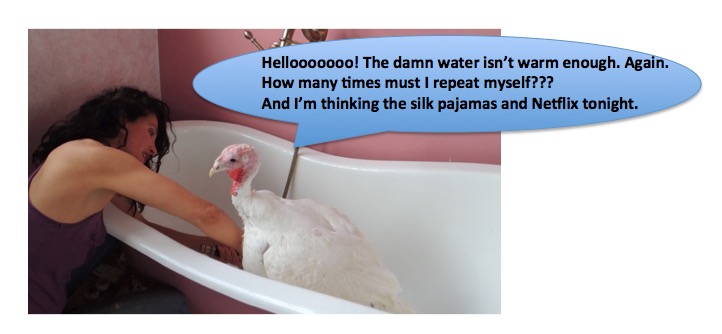
    Turkzilla: Image - imgur

    I figure that at this point between impending starvation and Aunt Gertrude's bunions you are in one lousy mood. But fear not, there is always dessert, or in this case, just dessert.

    Fifth course: Apple pie (formaldehyde)

    Formaldehyde occurs naturally in a variety of fruits, including apples. So, there's gonna be some of the stuff in apple pie. How bad is it? When it comes to chemistry, pharmacology, and toxicology, it would be hard to find a more authoritative source for than the aforementioned Food Babe:
    Formaldehyde is one of the most highly toxic substances on earth. It is linked to allergies, brain damage, cancer, and auto-immune disorders.
    Vani Hari (the Food Babe)
    Source: You Won’t Believe Where Silly Putty Is Hiding In Your Food

    She's pretty much dead on if you ignore the 10,000 (or so) chemicals on earth that are more toxic. And the fact that a small amount of formaldehyde is actually required for the biosynthesis of amino acids. Or that it is metabolized within minutes in the blood and then cleared from the body.
    Well, I'm sorry to report that you just drove 3 hours to eat nothing, but not for naught. Fasting is good for you! And has more cred than the "Dean of Derangement," Andrew Weil?

    (If you want to know why I turned Weil into a Pez dispenser you'll have to read "It's World Homeopathy Week! All 8 Days Of It.")

    "At one time, I experimented with fasting one day a week as a useful physical and psychological discipline. Many people experience a clearer mental state and increased energy after a short-term fast." [Psst. It obviously didn't work]
    Dr. Andrew (Pezhead) Weil
    If I don't stop now it will be Christmas before this damn thing gets done. And we at Council sincerely hope you live until Christmas. But beware. Phony scares don't end in November.

    NOTES:

    (1) If you dare, you can read about Aunt Wilma's turkey. See: "Exploding Turkeys Or My Aunt Wilma's? Pick Your Poison"

    (2) I fancy myself as Barry White, but I'm pretty sure this is false. 
     

    Saturday, August 18, 2018

    Disorder In The Court - A Supernaturally Dumb Lawsuit Over The Word 'Natural'

    By Josh Bloom — August 15, 2018 @ American Council on Science and Health

    The terms "natural" and "organic" have spurred a cottage industry in which companies and internet sleazebags compete to suck money out of the thoroughly manipulated and misguided American public. And it's been a smashing success!

    For example, how many of you know that organic foods:
    1. Are grown using chemicals -  pesticides and herbicides. To be certified organic, farmers are permitted to use chemicals from a different list, all of which have their own properties, including toxicity. 
    2. Offer no additional nutritional value than their conventional counterparts.
    3. Cost a whole lot more than their conventional counterparts.
    And did you know that:
    1. Lead is natural
    2. So is uranium
    3. And so are dioxins (1)
    So, let's just call this a mini-lesson about how useless and confusing the two terms are. Too bad Alexandra Axon doesn't read ACSH or she'd know how scientifically ridiculous her lawsuit against Florida’s Natural and its parent company, Citrus World Inc.

    Or is it?

    Or perhaps she does know. The Brooklyn woman is suing the company as part of a class-action lawsuit by The Richman Law Group, against the juice maker, claiming that the presence of trace quantities of glyphosate in the juice means the claim "natural" cannot be used on the label.

    Hmm. Glyphosate. Monsanto. It's only natural to sniff out a hidden agenda when lawyers smell a fat payday against Monsanto (2). And that's the case here. There have been more than 300 cases filed against the company in a San Francisco federal court by cancer victims who claim that the chemical caused their cancers.

    And who can blame Axon for wanting a piece of the action? On August ninth a California jury ruled against the company and awarded $289 ( $39.2 million in compensatory damages and $250 million in punitive damages) for failing to warn Dewayne Johnson, a groundskeeper, who claimed that the herbicide caused his non-Hodgkin's lymphoma, about the risk of cancer from glyphosate. The only problem is that glyphosate does not cause cancer, something that my colleague Dr. Alex Berezow wrote about last year (See Glyphosate-Gate: IARC's Scientific Fraud).

    Despite the overwhelming evidence against the carcinogenicity of the chemical, when you follow the formula:  The name Mosanto + Any chemical or product + Any California jury + California anti-chemical Craziness.

    The verdict is virtually guaranteed to be determined in advance: Defendant is doomed regardless of evidence, lack of evidence, whether the defendant even had cancer, or whether the day of the trial ends in "Y."

    But this article is not about cancer. It's about how ridiculous the Brooklyn "natural" claim is. In the suit, Axon claims that Florida’s Natural Growers orange juice should not contain the term "natural" because it contains minuscule amounts of glyphosate. How much? An independent lab determined that the juice contained 5.11 nanograms per mL. Is this a lot? A little? Does it matter? Let's do some math. Perhaps it will even be correct (3).
    • 5.11 nanograms = 0.0000051 mg. This is the amount of glyphosate in 1 mL of the juice.
    • 8 ounces = 237 mL 
    • So, one 8-oz glass of the OJ will contain 0.0012 mg of glyphosate.
    • The LD50of glyphosate in rats is about 2,800 mg.
    • So, it would take 233,333,333 glasses of OJ to get enough glyphosate to kill a rat (4).
    • That's a lot of #%#%#ing OJ
    So, the orange juice isn't going to harm anyone or anything, but is it "natural?" This is a rather existential question because although the EPA doesn't list a maximum allowable quantity of glyphosate for orange juice, it does for oranges - 0.5 ppm, which is 100-times more than the amount found in the OJ. Which means: If the OJ isn't "natural", neither is the organge. Which also means: Nothing on Earth is "Natural".

    Because with the right analytical instrument something man-made will be found in every food on earth. Do you see how silly this is?

    But it gets sillier. Also in the suit are claims that the OJ cannot be called natural because of "deaeration, the process of removing oxygen as a preservative; blending and long-term storage."
     
    Well isn't that interesting? Mixing the juice, sucking out the oxygen, and putting it in a carton also means it cannot be natural. Which makes me wonder about milk. 
    
    
    "Not Natural" because they were Pasteurized, mixed and put in a carton.
    
    So, neither is...


    Not Natural......Because it's in a container.
    Photo: Modern Farmer.

    Nor is...
    Not Natural...because the milk is being collected in a pail!
     
    So, the only way to drink truly natural milk would be...


    This article is obviously stupid, but I couldn't think of a better way to describe what is going on in the court in Brooklyn.   So I had to write it................ Naturally.

    NOTES:

    (1) Dioxins are formed by volcanoes and forest fires. They were in the environment long before any human roamed the earth.
    (2) Sorry, Monsanto haters, you'll need a new placard. The company was recently bought by Bayer.
    (3) But more likely not. I use math in my articles from time to time. I don't believe I've ever gotten it right, even once. Go ahead. Shoot me down. I'm used to it.
    (4) There is no LD50 data for glyphosate humans, but the very low toxicity is consistent in other animal models. There have been fatalities from intentional exposure of the chemical, but these deaths are attributed to other ingredients that help the chemical get into plants.

    Tuesday, August 14, 2018

    The New York Times And Chemicals - Amateur Hour Once Again

    By Josh Bloom — August 12, 2018 @ American Council on Science and Health

    It's a good thing that the New York Times has the resources to hire someone to cover for its "chemical expert" Nick Kristof, who is qualified to write about toxicity because he is... a lawyer.

    Nonetheless, Kristof believes that he is knowledgeable enough to write about chemistry and toxicology, something he does fairly often. He is clearly not (See Why I Don't Write About Pottery From The Ming Dynasty And Nick Kristoff Shouldn't Write About Science).

    Kristof's replacement last week was Niraj Chokshi, who sports a B.A. in psychology, and Chokshi tepped up like a trooper. Otherwise, we might have been deprived of a recent article on a really lame scare about chemicals in crayons. It is not clear which of the two is less qualified to be writing about toxicology.

    As the "newspaper of record," you'd think that the Times might be able to afford, let's say, a scientist to write about science, but the paper has shown no inclination to do so. Instead, we get "the newspaper of the broken record" - devout amateurs who simply parrot the words of other know-nothings, like the Natural Resource Defense Council, Chokshi doesn't help his credibility much by going to just about possibly the worst source for information of any kind, especially science - the United States Public Interest Research Group. Rather than wade through libraries of evidence to support this, I think I'll just rely on American Council president Hank Campbell. He knows firsthand:
    "I worked there in the late 1980s and they were wrong on every single issue - except a bottle bill instead of mandatory government recycling. They were right on that then, and they'd still be right today; government recycling is a fiasco. But aside from that, if there was an environmental fad they created a campaign about it. From nuclear energy to acid rain, they claimed we were doomed unless people gave us money."   American Council president Hank Campbell, August 9, 2018
    Given the background of the reporter and the quality of his source, one might expect that the science wouldn't be so hot. One would be correct. It's the same old song - claiming that the presence of a given chemical tells us anything about its health hazard. This fallacy is commonly used but it is dead wrong, especially when the discussion does not include dose or exposure.

    In the article Chokshi  speaks with Dev Gowda, one of the authors of US PIRG's new "woe is me" publication entitled "Safer School Supplies: Shopping Guide." (Gowda has a B.S. in psychology and a law degree. Are you picking up a theme here?). Here are some more absurd claims that are found in the Times article:

    "United States Public Interest Research Group Education Fund, which had an independent laboratory test 27 back-to-school products. Four tested positive for dangerous chemicals."

    There ya go. The usual - kids, dangerous chemicals, tested positive. Straight from the NRDC playbook. "Tested positive" means that the chemical is detectable, but says nothing about how much is there. With advances in analytical methods over the past few decades, minuscule quantities of chemicals are being "discovered" just about everywhere. The chemicals have always been present but in the past, the instrumentation was not sensitive enough to detect them. Now it is. Are these products now more dangerous because we now know about the chemicals in them? Really silly.

    “It’s insane for us to be finding asbestos in kids’ products, whether it’s technically legal or not, and parents shouldn’t have to worry about this in 2018."

    The Green Crayon
    From Hell. Image:
    HalloweenCostumes.com
    What's really insane is the thought that parents have to read this tripe and worrying about nothing because we do not know if Gowda is talking about one pound of asbestos or one molecule:

    "Of the crayons tested, one, a green Playskool crayon, tested positive for trace amounts of tremolite, a form of asbestos."

    Whatever that means.

    "One of those compounds, benzene, is a known carcinogen and was found in a package of six magnetic markers purchased on Amazon and produced by The Board Dudes, a brand owned by Mattel."

    Yes, benzene is a carcinogen. But if you don't want to be exposed to any of it stop breathing. Gasoline can contain a maximum of 0.62% benzene, some of which gets into the air. Is this more or less than what was found in one package of The Board Dudes? Who knows?

    "In another set of tests, the public interest organization examined three three-ring binders for phthalates, a group of chemicals added to plastics to make them flexible, some of which may affect human reproduction or development."

    No, they don't. (See American Academy Of Pediatrics Goes Crybaby Over 'Scary' Chemicals)
    "Since the scientific evidence strongly suggests that risks to humans are low, phthalate regulations that have been enacted are unlikely to lead to any marked improvement in public health."  Michael A. Kamrin, Phthalate Risks, Phthalate Regulation, and Public Health: A Review, Journal of Toxicology and Environmental Health, Part B: Critical Reviews, 12:2, 157-174 (2009) DOI: 10.1080/10937400902729226
    In another horrific development:

    "Four markers were sent to the laboratory, and two dry-erase ones tested positive for a group of compounds often found in petroleum products and known as B.T.E.X.: benzene, toluene, ethylbenzene and xylene."

    Uh oh. More nasty chemicals. But..."... and none [were present] at levels considered worrying by toxicologists, according to the report.

    What a relief.

    So, this article, which probably terrified mothers all over the country is a big fat nothing. It is a psychology major interviewing another psychology major with a law degree who represents US PIRG - a group with not a single scientist on its staff page.

    All the news that's fit to print?

    Hardly. Just a  bunch of ignorant chemophobic nonsense.

    NOTES:

    (1) NRDC recently used Kristof (!) as its sole source of science in an embarrassingly ridiculous Facebook video, which equated the pesticide chlorpyrifos with the Nazi nerve gas Sarin (See NRDC's Hitler-Pesticide Video Worthy Of Joseph Goebbels).

    Sunday, July 8, 2018

    Fentanyl 101- Let's Clean Up The Terminology

    By Josh Bloom — July 2, 2018

    It's more than a bit ironic that nine months after I wrote about how the Kolodny Klan was using misleading words (and numbers) to promote their version of the fake opioid crisis (See The Opioid Epidemic In 6 Charts Designed To Deceive You) that some of the pain patients who are fighting back are doing the same things, albeit, unintentionally. Let's fix this.

    ORGANIC CHEMISTRY NOMENCLATURE IS MADNESS

    For most people, chemistry is difficult enough, but when you toss in nomenclature, logic becomes illogical. There are multiple ways to name almost all chemicals. It is not rare to see a dozen different names for the same compound, some of which make sense and others are bewildering. As in Figure 1...........To Read More.....

    My Take - Make sure to read the comments.


    Thursday, June 28, 2018

    Could Herpes Cause Alzheimer's? Maybe

    By Josh Bloom — June 27, 2018 @ American Council on Science and Health

    A recent study in the journal Neuron has found a strong link between two rather obscure and poorly understood families of human herpesviruses and Alzheimer's Disease (AD). This is a fascinating development.

    Dr. Joel Dudley of Mount Sinai Medical School and colleagues identified two herpes viruses that were strongly associated with AD. The group found that people who had AD when they were alive had more of two viruses, human herpesvirus-6A (HHV-6A) and HHV-7, (1) in their brains than those who did not.

    The paper, which is long and complex, once again raises the possibility that AD is caused by a virus, a theory that has been hotly disputed for years. I wouldn't bet against Dudley for two reasons: 1.A fundamental but unanswered question about AD has always been whether the plaques that form in the brains of its victims are the cause of the disease or the result of damage from something else. like infection or head trauma. Since all attempts to prevent or dissolve the plaques have failed to impact AD (2), perhaps something else, like a pathogen, is the causative factor and the plaques are merely an aftermath. 2.Pathogens, especially viruses, are increasingly implicated in diseases in which there was no apparent connection until one was discovered. Dr. Dudley makes this quite clear:

    “Even if the questions remain, this research offers strong support for a long-controversial hypothesis that viruses might be involved in the development of Alzheimers disease. We didn’t have a horse in this virus race whatsoever. It’s the data that took us there. And now, not only is the viral hypothesis resurrected: it has specific testable pathways and networks and interactions that can be explored and reconciled with the rest of the work emerging in Alzheimers.”

    Joel Dudley , M.D.

    I think that it a given that we will continue to see some important and surprising discoveries that will reveal that pathogens are the root cause of poorly understood maladies, for example, a range of viral infections and the development of autoimmune diseases (3). Epidemiology certainly backs this up. About 15% of cancers worldwide are attributed to viral infections. Two other cancers are attributed to bacterial infections.

    CANCERS CAUSED BY VIRUSES

    •Infection by both hepatitis B and C cause hepatocarcinoma (liver cancer).
    •The human papillomavirus (HPV) causes cancers of the cervix, anus, vagina, penis, and head and neck.
    •Kaposi's Sarcoma, a cancer that was rare before the onset of the AIDS epidemic is caused by human herpesvirus 8 (HHV-8).
    •Certain lymphomas and Hodgkin’s disease are caused by the Epstein-Barr virus (EBV, HHV-4) causes mononucleosis as well as
    •Human T-cell leukemia virus (HTLV), a retrovirus (5), causes certain leukemias and lymphomas. Although 10-25 million people worldwide are infected, only 5% of them get any disease from the virus.

    CANCERS CAUSED BACTERIA

    •Helicobacter - Ulcers and stomach cancer
    •Tuberculous - Lung cancer

    There are nine herpes families that infect humans (4). Most of these are either well-known or at least have recognizable names - HSV-1 and-2, Epstein-Barr, varicella-zoster, cytomegalovirus. But the two herpes families that were found to be associated with AD were HHV-6a and HHV-7, and little is known about either one of them. Almost all humans are infected, primarily during childhood, but rarely cause disease.

    In 2005, Barry J. Marshall and J. Robin Warren won the Nobel Prize in Physiology or Medicine for their discovery of Helicobacter pylori and its role in gastritis and peptic ulcer disease. Ulcers were caused by an infectious disease, a startling revelation at that time. Perhaps the Mount Sinai group's findings will point others in a different direction. One is sorely needed. There are now 5 million Americans living with this awful disease and this number is expected to grow to 17 million by 2050.

    If researchers turn their attention to the role of infectious pathogens in causing seemingly unrelated diseases perhaps we will see more surprises like Marshall and Warren's discovery.

    There are plenty of Nobel Prizes out there. Whoever discovers the root cause of Alzheimer's can expect a nice trip to Stockholm.

    NOTES:
    (1) HHV-6 belongs to the Roseolovirus subfamily of herpesviruses. HHV-7 belongs to the Betaherpesviridae subfamily.
    (2) Derek Lowe over at Science Translational Medicine has frequently written about the failures of drugs that were designed to prevent or modify plaques. His most recent article about Merck's failed attempt can be read here.
    (3) Multiple viral infections have been postulated as causes for a host of autoimmune diseases, for example, Type 1 diabetes, rheumatoid arthritis, lupus, and multiple sclerosis.
    (4) It's not just humans. Feline leukemia virus (FeLV), as the name implies, causes leukemia, which is a major cause of death in cats that have not been vaccinated.
    (5) Retroviruses are particularly nasty concoctions of nature. Like many other viruses their genetic material is RNA but they also have two specialized enzymes differentiate them from normal viruses. One is reverse transcriptase, which uses the viral RNA as a template to build viral DNA. The other is called integrase, which inserts the newly formed DNA into the DNA of the host cell, which changes its genome. Then you're not you anymore. The cells that are infected are transformed into something you weren't born with.
    Original Soure: Readhead et al., 2018, Neuron 99, 1–19 July 11, 2018. "Multiscale Analysis of Independent Alzheimer’s Cohorts Finds Disruption of Molecular, Genetic, and Clinical Networks by Human Herpesvirus" https://doi.org/10.1016/j.neuron.2018.05.023

    Sunday, June 24, 2018

    99.99% Of The Pesticides We Eat Are Made By Plants

    By Josh Bloom — June 7, 2018 @ American Council on Science and Health

    When Bruce Ames talks about toxicity, it's time to listen (1). Ames is the inventor of the hugely important Ames test for mutagenicity, which measures the damage done to DNA by a given chemical. The Ames test is an essential hurdle in the world of drug discovery research. While a positive Ames test is not de facto proof that a chemical will be carcinogenic in humans, it's a giant red flag in drug development. Many promising drugs have met their maker simply because of a positive Ames test.

    GOOD LUCK AVOIDING PESTICIDES

    Since pesticides and herbicides are routinely in the news, lately because of the "Glyphosate Wars," (2) I thought it might be interesting to examine a review article that Ames and colleagues wrote nearly three decades ago in Proceedings of the National Academy of Sciences (PNAS). If you are dwelling under the illusion that you can prance into Whole Foods and overpay for a bunch organic stuff without pesticides, this article will disabuse you of that fallacy. If you don't want to consume pesticides, then you better stop eating, because you are consuming them with each bite. Plenty of them. According to Ames:

    • 99.99% (by weight) of the pesticides consumed by the American public are made by the plants themselves as a defense mechanism.
    • Synthetic and natural pesticides are equally likely to be carcinogenic.
    (You are unlikely to see this information posted in a Whole Foods.)
    Ames writes (emphasis mine):
    "Toxicological examination of synthetic chemicals such as pesticides and industrial pollutants, without similar examination of the chemicals in the natural world to use for comparison, has generated an imbalance in both data and perception about potential hazards to humans."
    No kidding. At the American Council, we have been screaming this for many years, only to be called "shills for industry" anytime we dare to call a chemical safe. Not only are we not shills (3) but we have been right about one key point all along. The divide between "natural" and "artificial" chemicals is meaningless - something many Americans do not know. The origin of a chemical is irrelevant. Your body cannot tell what is natural or synthetic - only the properties of the chemical matter.

    It is hard to blame consumers; the organic food industry and Internet quacks have done a masterful job in creating a narrative that maintains that we are all being poisoned by tiny quantities of thousands of man-made chemicals, and the way to avoid this is to buy so-called "natural" products because they don't contain chemicals. But the narrative is dead wrong. Great marketing. Terribl ;science. Let's take a look at how Ames reached his conclusions.

    RAT AND MOUSE MODELS OF CARCINOGENICITY - PLENTY OF LIMITATIONS

    All of the carcinogenicity data in the PNAS paper was derived from rat and mouse models of cancer, which are notoriously unreliable in predicting human cancers, but the best we have. Ames and colleagues at UC Berkeley scoured the literature looking for studies about foods that contained known natural pesticides. The numbers are enormous. For example, in cabbage alone,  49 pesticides and their metabolites were detected. Of these, two chemicals, chlorogenic acid, and allyl isothiocyanate were found to cause tumors in rats, but not in mice (4). Ames estimates that Americans consume 5,000-10,000 different natural pesticides.

    CARCINOGENS ARE EVERYWHERE

    The review also identified studies in which plant-based pesticides had been tested (in high doses) (5) to see if they caused cancer in rodents. Fifty-two of these pesticides, all commonly found in a variety of foods, were evaluated in this manner; 27 were found to be carcinogens. More than half.
    "Nature's pesticides are one important subset of natural chemicals. Plants produce toxins to protect themselves against fungi, insects, and animal predators."
    Bruce Ames, et. al.
    Plants do not exist to serve humans; they are here because they have survived and reproduced. In order to do so, they evolved the ability to synthesize chemicals to protect them from predators. Despite the constant railing against pesticides, we would have nothing to eat if plants didn't make the ones they needed for defense.

    AND WE EAT A LOT OF THEM

    Our silly obsession with avoiding tiny quantities of pesticide residues on an apple looks even sillier when we examine the relative amounts of both natural and synthetic pesticides that we consume. When the FDA analyzed food for the presence of important synthetic chemicals (likely to be found in the environment), 105 different chemical residues were detected in food (6). The sum total of these 105 chemicals (combined) was estimated to be about 0.09 mg per person per day, about half being carcinogens. By contrast, we consume about 1.5 g (1,500 mg) of natural pesticides daily.
    We also conclude that at the low doses of most human exposures the comparative hazards of synthetic pesticide residues are insignificant.

    BUT WE ARE NOT ALL DEAD

    We regularly consume thousands of pesticides, most made by the plants, and a much smaller quantity of pesticide residues that were applied to the crops. Yet, here we are still here. The reason is obvious, and it is the same reason that the tiny quantities of ubiquitous environmental boogeymen like BPA, phthalates, and parabens are nothing to worry about - dose. Carcinogenic chemicals, whether they are plant-based or synthetic, are processed by the liver and excreted. This is the liver's job, and it does it quite well. Otherwise, there would be no need for synthetic pesticides because the cabbage would have already planted us in the ground.

    NOTES:
    (1) Bruce Ames, one of the founders of the American Council has not won the Nobel Prize for his invention. This leaves me bewildered.
    (2) Although there is nothing funny about it, there has been plenty of funny business concerning glyphosate lately, including fraud. Speaking of fraud, see my colleague Alex Berezow's brutal takedown of the corruption of IARC. Dr. Berezow has also written about plant-based pesticides here.
    (3) Shills? Hardly. At ACSH we keep a wall between science and fundraising to avoid even the appearance of a conflict of interest. At this time it is an unnecessary wall. I have been told that 97% of our funding comes from individual donors. I have no idea where the other 3% comes from.
    (4) Today's regulatory status of allyl isothiocyanate is not consistent with Ames' findings. The chemical does not appear on California's Proposition 65 list and is in the IARC Group 3 - not classifiable as to its carcinogenicity to humans.
    (4) This discrepancy is explained by the National Toxicology Program as the mice not receiving the maximum tolerated dose of the two chemicals while the rats did.
    (5) I'm not kidding about high doses. About half of these tests were run at the maximum tolerated dose (MTD) - the dose at which animals start dying if it is exceeded. What, if anything, this has to do with humans consuming small amounts of the chemical is not known - another limitation of rodent carcinogenicity tests.
    (6) National Research Council, Board on Agriculture (1987) Regulating Pesticides in Food (National Academy Press, Washington, DC).

    Wednesday, February 21, 2018

    Descent Into Madness: Natural, Organic, Additive-Free Cigarettes

    By Josh Bloom — January 23, 2018

    After seven years at this job that there can't possibly be any surprises left, right? We've seen it all: Raw water, raw milk, coffee enemas, vaginal steam cleaning, female Viagra, gluten-free gluten, placenta eating, killer cash register receipts, penis bleaching, mind-control fluoride, studies of pee in pools, and inorganic pesticides used in organic farming.
     
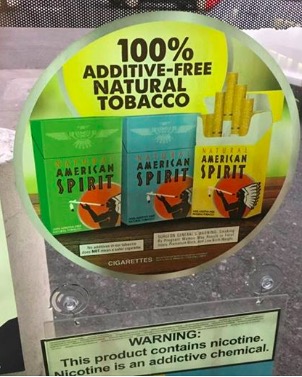
    You name it, we've seen it. But let's not forget what I was reminded of, one of the grand-daddies of them all, when I saw this in the window of a carwash (soap-free?).
     
    These "natural" things have been around since 1982, which could be interpreted as a surrogate measure of how often I wash my car (1).
    "Natural American Spirit offers the best in organic & menthol tobacco cigarettes"
     Americanspirit.com website
    When we wrote about them in 2015, after FDA warned them about being aggressive in their "organic" claims, we noted that it used to be that a shady company masking its harm would be taking tactics 'right out of the Big Tobacco playbook', but today cigarette makers use tactics 'right out of the Big Organic playbook.'
     
    Though it's wrong to think natural means healthier (see my book on natural versus artificial flavors, colors, etc.) people do just that.
     
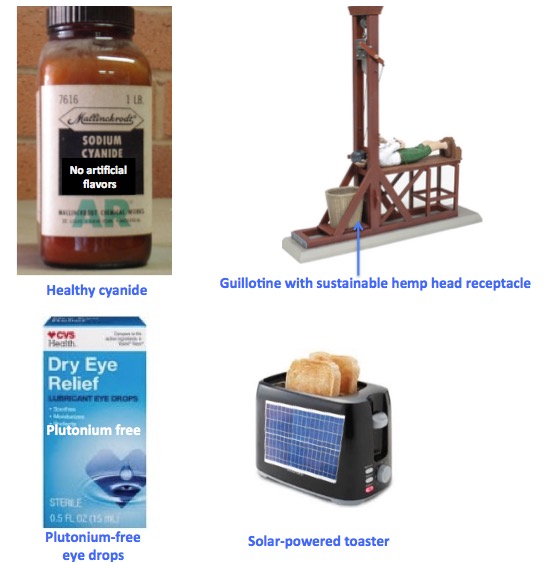
    So, I could not help but wonder what other fine products could also adopt tactics right out of the Big Organic playbook.
     
    Maybe these?
     

    A sampling of other fine products, real or imagined. But, as of yet, these are not being sold at the Yonkers Central Park Car Wash ($9.99 plus tax).
     
    No additives, natural or organic - there is is no such thing as a healthy cigarette
     
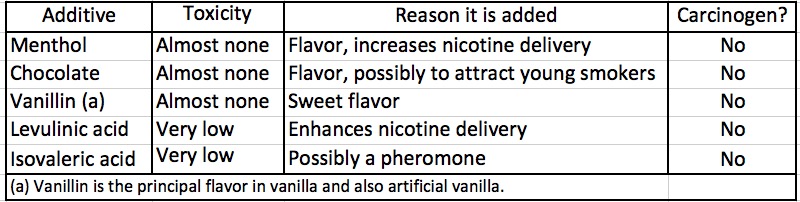
    Now, having dispensed with this silliness (idiocy if you prefer) I figured it would be amusingly instructive to look at some of the chemicals that are added to cigarettes and compare them to some that are formed when you inhale the combustion products of tobacco. Let's start with the additives (Table 1). (599 have been documented. I selected a few that you may have heard of.)


    Table 1. Selected tobacco additives. Source: Am J Public Health. 2007 November; 97(11): 1981–1991.
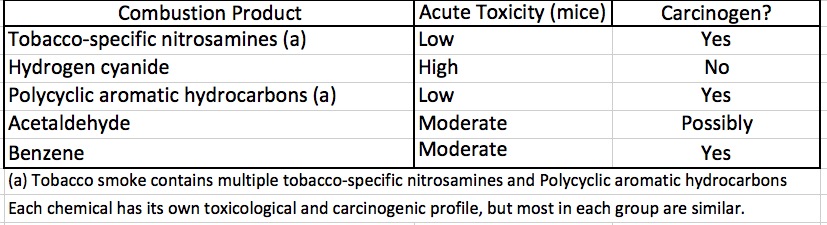
    Now let's look at a handful of chemical that are formed when tobacco burns.
     
     Table 2. Selected tobacco combustion products. Source: American Cancer Society
     
    You are witnessing pure madness. The sleazebags at Natural American Spirit are suggesting that their product is better or safer because they have not added chemicals to their stupid cigarettes. Now compare Tables 1 and 2 and it becomes very obvious very quickly that the chemicals that are not added to Natural Spirit cigarettes are more or less harmless (2).
     
    But the handful of the thousands of chemicals that are the combustion products of tobacco? Rather different, no? Which may make you wonder what good it does to buy your coffin nails that don't have a bunch of mostly harmless additives when it is the tobacco itself that is gonna kill you. That's a very good question. So unless you're a real  you won't fall for this stupid nonsense.

    That is unless you belong to the genus imbecilus maximus and are willing to spend $38.49 for this...
    Raw water from Live Water. $38.49 for a gallon.
    Phallic-looking tropical plants not included.
    Gasoline costs one-tenth that.
    And is probably better to drink.


    ..then hopefully you'll see Santa Fe Natural Tobacco Co. for what they really are. (Insert expletive here).
     
    Gotta go. I do my laundry about as often as I wash my car. Perhaps this explains my sub-abysmal social life.


    Josh's low-detergent footprint wheels.
    The babes love it. 


    NOTES:
     
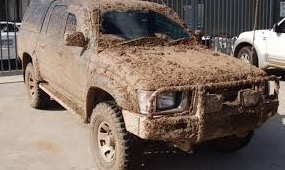
    (1) In order to be a good citizen of the planet and minimize my "detergent footprint," I have cut back on washing my car from once per year to... less than that. Consequently, it looks a little like this. (As if you're so perfect?)
     
    (2) It is impossible to include toxicity or carcinogenicity data on 599 chemicals or to draw an accurate conclusion of the group. Some of the chemical additives have their own toxicity, but as a group, it does not compare to the chemicals in tobacco smoke.