Search This Blog

De Omnibus Dubitandum - Lux Veritas

Showing posts with label Bonner Cohen. Show all posts

Saturday, June 24, 2023

Supreme Court’s WOTUS ruling will shake things up across the board

By June 23rd, 2023 44 Comments @ CFACT

Last month’s landmark Supreme Court ruling in Sackett v. EPA not only narrowed the scope of the Environmental Protection Agency’s (EPA) authority to regulate wetlands, but it will also have reverberations far beyond the Clean Water Act (CWA).

What began as an effort by Michael and Chantell Sackett to build their dream home on their 0.63-acre lot near Priest Lake in northern Idaho morphed into a 16-year legal battle that ended in a victory for the couple and a defeat for EPA when the High Court ruled that their property was not a wetland and thus not subject to EPA regulation under the 1972 CWA. But in decreeing that the only wetlands EPA could regulate were those with a “continuous surface flow” to a navigable water, such as a lake or river, the court rendered a judgment that will affect other federal environmental statutes as well.

Removing the need for many projects to obtain permits under Section 404 of the CWA, which governs dredge-and-fill discharges, will erase important triggers for National Environmental Policy Act (NEPA) and Endangered Species Act (ESA) reviews, according to George Glicksman, a law professor at George Washington University.

Effects on NEPA and the ESA

“The programs are intertwined in ways that aren’t immediately obvious,” he told Greenwire (June 15). As Greenwire explained:

“Both NEPA and the ESA require federal action to trigger a review, which in turn forces developers to consider their project’s effect on the environment and vulnerable species. Otherwise, a Section 404 forms this federal connection. But without a Clean Water Act permit, that federal nexus – in some cases – disappears.

Depending on the complexity of the project, NEPA, for example, can require either an environmental assessment or a much more comprehensive environmental impact statement (EIS). It can take years for federal officials to complete an EIS, prompting some developers to walk away from a proposed project out of sheer frustration. Before the Supreme Court’s May 25 ruling, an EIS, which included a project’s effect on a wetland with no continuous surface connection to a navigable body of water, prolonged the permitting process. With wetlands lacking that continuous surface connection no longer subject to CWA Section 404 permits, some environmental reviews will be shorter.

As it happens, the court’s ruling coincided with the enactment of a debt-ceiling agreement, which put time limits on the issuance of some federal permits. The result of both developments is less red tape.

Similarly, determining what constitutes a threatened or endangered plant or animal’s “critical habitat” under the ESA will become simpler in some cases because the types of wetlands subject to federal authority have been reduced.

By declaring the Sacketts’ bone-dry property a wetland, and then putting the couple through 16 years of litigation hell, EPA ultimately wound up diminishing its own authority under the CWA. As Professor Glicksman points out, the Supreme Court’s decision also affected two other environmental statutes. For decades, provisions of the CWA, NEPA, and ESA were skillfully used by regulators and special interest groups as a form of federal zoning to snuff out development not to their liking.

To be sure, the ESA is still a hopelessly cumbersome law with a terrible record of recovering vulnerable species. And NEPA still makes it difficult for the United States to carry out much-needed infrastructure projects. But the administrative regulatory state has been dealt a setback, and the country has moved a few steps closer to restoring the Constitution’s separation of powers.
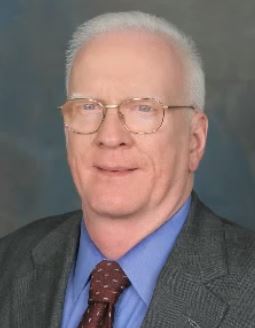
Author

  • Bonner Cohen, Ph. D.

    Bonner R. Cohen, Ph. D., is a senior policy analyst with CFACT, where he focuses on natural resources, energy, property rights, and geopolitical developments. Articles by Dr. Cohen have appeared in The Wall Street Journal, Forbes, Investor’s Busines Daily, The New York Post, The Washington Examiner, The Washington Times, The Hill, The Epoch Times, The Philadelphia Inquirer, The Atlanta Journal-Constitution, The Miami Herald, and dozens of other newspapers around the country. He has been interviewed on Fox News, Fox Business Network, CNN, NBC News, NPR, BBC, BBC Worldwide Television, N24 (German-language news network), and scores of radio stations in the U.S. and Canada. He has testified before the U.S. Senate Energy and Natural Resources Committee, the U.S. Senate Environment and Public Works Committee, the U.S. House Judiciary Committee, and the U.S. House Natural Resources Committee. Dr. Cohen has addressed conferences in the United States, United Kingdom, Germany, and Bangladesh. He has a B.A. from the University of Georgia and a Ph. D. – summa cum laude – from the University of Munich.

Monday, December 19, 2022

DNA researchers uncover secrets of Greenland’s ancient climate

By December 16th, 2022 Climate 41 Comments @ CFACT

We have long known that Norsemen settled Greenland just over a millennium ago, where for the next several hundred years they survived primarily by fishing and hunting in a much warmer climate than Greenland has today.

They called their new home Greenland because this giant island in the North Atlantic was, in fact, green. The warmer temperatures in Medieval times even enabled a form of subsistence agriculture to take root at much higher latitudes than would be possible today, and generations of hardy Norsemen in Greenland assumed things would stay that way. Alas, they were forced to abandon Greenland in the late 15th century as a result of plummeting temperatures.

The Little Ice Age had come calling.

Today, Greenland’s over 833,000 square miles are home to slightly more than 56,000 people, who are heavily concentrated along the country’s southwestern coast. The northernmost tip of Greenland is an Arctic desert, where lichens and moss are about the only forms of life one will encounter. But it wasn’t always that way.

A Much Warmer World

In a study published Nov. 7 in Nature, researchers genetically mapped 2-million-year-old DNA from Arctic sediments. They discovered that today’s Arctic desert — where it’s so dry there isn’t enough moisture to create snow — was once home to over 100 plant genera, nine animal taxa, including the extinct elephant-like mastodon, and even marine life within the same region. All this was made possible by an ancient ecosystem that was 18 to 31 degrees Fahrenheit warmer than modern-day Greenland.

It took an international team of researchers 16 years to disentangle what is now the oldest DNA to be identified. As criminal investigators know, DNA doesn’t lie. “A team effort painstakingly matched every fragment with extensive libraries of DNA collected from present-day plants, animals, and organisms,” the Washington Post (Nov. 9) reported.

“Soon, a picture of the ancient forests, bays, flora, and fauna came into focus,” the Post continued. “Yet the results were also puzzling – many of the uncovered animals and plants didn’t seem to make ecological sense. Plants and animals that are typically found in the Arctic were in the same ecosystem as those found in the boreal forests farther south. One abundant plant genus was dryas, which is typically found in the Arctic. Yet the team also found poplars, deciduous trees usually found in boreal forests.”

“No one would have predicted this ecosystem in northern Greenland at this point in time,” said Eske Willerslev, a palaogeneticist at the University of Copenhagen, who led the study.

Additionally, the team of researchers found evidence of hares, rodents, geese, and lemmings – species that are almost completely absent from northernmost Greenland today. Pointing to the diverse community of species that were sharing a common area of northern Greenland 2 million years ago, Mathew Barnes, an ecologist at Texas Tech University, who did not participate in the research, told the Post in an email: “It’s a mishmash of species that ‘do’ and ‘don’t’ belong together based on our understanding of modern ecology.”

His comments show that Barnes understands that “our understanding of modern ecology” may have to undergo a reassessment. Things that we think are a given in the modern natural world were not so in ancient times. Species have a remarkable ability to adapt to their surrounding – far greater than much fashionable ecological dogma is willing to admit.

Furthermore, the warmer temperatures the researchers were able to confirm were quickly (in geological terms) followed by a succession of Ice Ages that came and went, greatly altering the face of the Earth. Today, we’re living in an interglacial period, which means we’re between the last Ice Age, which ended about 11,000 years ago, and the next one.

The next time you read or hear that we’re experiencing “unprecedented climate change,” have a good chuckle. These people don’t know what they’re talking about and probably never will.

Author

  • Bonner Cohen, Ph. D.

    Bonner R. Cohen, Ph. D., is a senior policy analyst with CFACT, where he focuses on natural resources, energy, property rights, and geopolitical developments. Articles by Dr. Cohen have appeared in The Wall Street Journal, Forbes, Investor’s Busines Daily, The New York Post, The Washington Examiner, The Washington Times, The Hill, The Epoch Times, The Philadelphia Inquirer, The Atlanta Journal-Constitution, The Miami Herald, and dozens of other newspapers around the country. He has been interviewed on Fox News, Fox Business Network, CNN, NBC News, NPR, BBC, BBC Worldwide Television, N24 (German-language news network), and scores of radio stations in the U.S. and Canada. He has testified before the U.S. Senate Energy and Natural Resources Committee, the U.S. Senate Environment and Public Works Committee, the U.S. House Judiciary Committee, and the U.S. House Natural Resources Committee. Dr. Cohen has addressed conferences in the United States, United Kingdom, Germany, and Bangladesh. He has a B.A. from the University of Georgia and a Ph. D. – summa cum laude – from the University of Munich.