Search This Blog

De Omnibus Dubitandum - Lux Veritas

Showing posts with label Insects. Show all posts

Saturday, June 20, 2020

Are we facing an ‘Insect Apocalypse’ caused by ‘intensive, industrial’ farming and agricultural chemicals? The media say yes; Science says ‘no’

  June 16, 2020

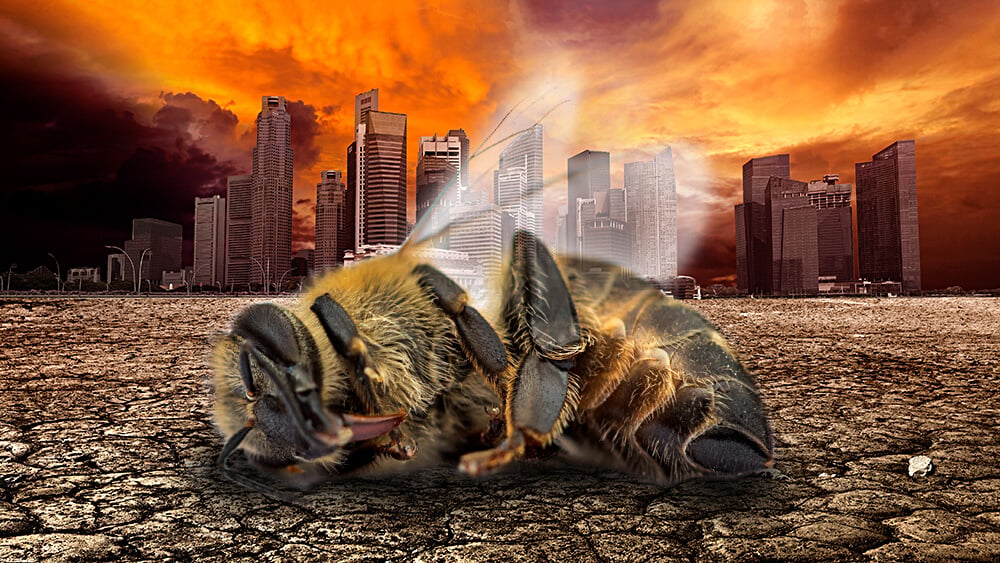
https://geneticliteracyproject.org/wp-content/uploads/2020/06/dead-bee-desolate-city.jpg

The media call it the “Insect Apocalypse”. In the past three years, the phrase has become an accepted truth of the journalism literati, and usually associated with such apocalyptic terms as “ecosystem collapse” and “food crisis”. The culprit: modern agriculture, which is often linked to the Brave Not-So-New World of GMOs and gene-edited crops and the chemicals purportedly used to support it.

As recently as last month, an opinion writer for the New York Times, Margaret Renkl, warned of the dark ages about to be ushered in by pesticides. She makes a case for preserving “weedy” backyards filled with blood-sucking mosquitoes and other human-threatening flying and crawling creatures of various species.
The global insect die-off is so precipitous that, if the trend continues, there will be no insects left a hundred years from now. That’s a problem for more than the bugs themselves: Insects are responsible for pollinating roughly 75 percent of all flowering plants, including one-third of the human world’s food supply.  
Insect Armageddon, another popular phrase, is now one of the most common tropes in science journalism. As I’ve chronicled numerous times in recent years, (including here, here and here), many journalists have echoed claims by environmental activists  advancing a succession of insect- and animal-related environmental apocalypse scenarios over the last decade—first honeybees, then wild bees and more recently birds. In each case they fingered modern, intensive farming, particularly crop biotechnology and pesticides, as the culprit, and warned of the terrible consequences in store for the Earth, including the mass extinction of pollinators and the global famine that would surely follow. In each case, small or poorly executed studies predicting imminent catastrophes were ballyhooed by many in the media; in each case, as more research came to the light, the hyped claims were eventually retracted or dramatically readjusted.............To Read More....

Tuesday, February 19, 2019

Is the Insect Apocalypse Really Upon Us?

Claims that insects will disappear within a century are absurd, but the reality isn’t reassuring either.


In 1828, a teenager named Charles Darwin opened a letter to his cousin with “I am dying by inches, from not having anybody to talk to about insects.” Almost two centuries on, Darwin would probably be thrilled and horrified: People are abuzz about insects, but their discussions are flecked with words such as apocalypse and Armageddon.

The drumbeats of doom began in late 2017, after a German study showed that the total mass of local flying insects had fallen by 80 percent in three decades. The alarms intensified after The New York Times Magazine published a masterful feature on the decline of insect life late last year. And panic truly set in this month when the researchers Francisco Sánchez-Bayo and Kris Wyckhuys, having reviewed dozens of studies, claimed that “insects as a whole will go down the path of extinction in a few decades.” The Guardian, in covering the duo’s review, wrote that “insects could vanish within a century”—a crisis that Sánchez-Bayo and Wyckhuys believe could lead to a “catastrophic collapse of nature’s ecosystems.”  

I spoke with several entomologists about whether these claims are valid, and what I found was complicated. The data on insect declines are too patchy, unrepresentative, and piecemeal to justify some of the more hyperbolic alarms...........First, some good news: The claim that insects will all be annihilated within the century is absurd. Almost everyone I spoke with says that it’s not even plausible, let alone probable. “Not going to happen,” says Elsa Youngsteadt from North Carolina State University........To Read More....

Sunday, February 17, 2019

We Are NOT Headed For World Without Insects - Insect Decline Survey Hitting Headlines Non Systematic, Patchy & With Limited Data

By Robert Walker | February 11th 2019 | Print | E-mail
 
Please don’t be scared by this, it is just the journalists hyping things up again. It does not mean what it seems to mean from the headlines. Insects can’t vanish and we will continue to be able to grow our crops and do agriculture. The study itself involves a lot of extrapolation on inadequate data, not their fault, it is just that there hasn’t been that much research done on insect populations for them to draw on.

The number of studies they found, 73, is not a lot for the whole world and the studies are limited. The authors are also getting criticism on twitter by experts for the way they conducted the survey, for instance they found it with a literature search in "Web of Science" for “[insect*] AND [declin*] AND [survey]” which seems likely to bias in favour of groups that are declining as well as miss out many surveys that don’t happen to use the term “survey”.

They should have stated the limitations of the survey and they do not seem to have taken the extra care needed for a survey likely to influence public opinion and decision making. This was a traditional review, and not the carefully conducted systematic review that you get in medicine and that first began to be used in conservation in 2006.........To Read More......

We Are NOT Headed For World Without Insects - Insect Decline Survey Hitting Headlines Non Systematic, Patchy & With Limited Data

By Robert Walker | February 11th 2019 | Print | E-mail
 
Please don’t be scared by this, it is just the journalists hyping things up again. It does not mean what it seems to mean from the headlines. Insects can’t vanish and we will continue to be able to grow our crops and do agriculture. The study itself involves a lot of extrapolation on inadequate data, not their fault, it is just that there hasn’t been that much research done on insect populations for them to draw on.

The number of studies they found, 73, is not a lot for the whole world and the studies are limited. The authors are also getting criticism on twitter by experts for the way they conducted the survey, for instance they found it with a literature search in "Web of Science" for “[insect*] AND [declin*] AND [survey]” which seems likely to bias in favour of groups that are declining as well as miss out many surveys that don’t happen to use the term “survey”.

They should have stated the limitations of the survey and they do not seem to have taken the extra care needed for a survey likely to influence public opinion and decision making. This was a traditional review, and not the carefully conducted systematic review that you get in medicine and that first began to be used in conservation in 2006.........To Read More......

Friday, September 14, 2018

Media sounds alarm on crop insects despite record yields

by

Environmental activists have published a study claiming global warming will cause a decline in crop yields because warmer temperatures benefit crop-feeding insects. The media made the study its highest profile story last week, with NBC News, Inside Climate News, and Voice of America among the many media outlets writing doom-and-gloom stories based on the study. A look at objective crop data, however, shows crop yields continue to set new records virtually every year as the earth continues its modest warming.

The new study claims global warming is especially impacting temperate regions of the globe such as the American Midwest where much of the world’s food is grown. Shorter winters and warmer growing seasons will benefit insects, some of whom feed on agricultural crops, the study claims.
“Climate change will have a negative impact on crops,” said Scott Merrill of the University of Vermont, a co-author of the study.

“We’re turning the dial up in the temperate zones, and insects, for the most part, thrive in a warmer climate,” added study co-author Josh Tewksbury of Future Earth in Colorado. “It gets better and better for them.”

The study, however, overlooks the fact that shorter winters and warmer growing seasons make things “better and better” for crop yields also. As the United Nations Food and Agricultural Organization reports, global cereal production set a new record last year, which is merely the latest in a long line of recent global crop production records.

According to the new study’s theory, the warming of the past several decades should already have increased insect activity and ravaged crop production. To the contrary, crop yields continue to set record after record as the planet warms.

Score this one Objective Scientific Data 1, Alarmist Global Warming Predictions 0.